

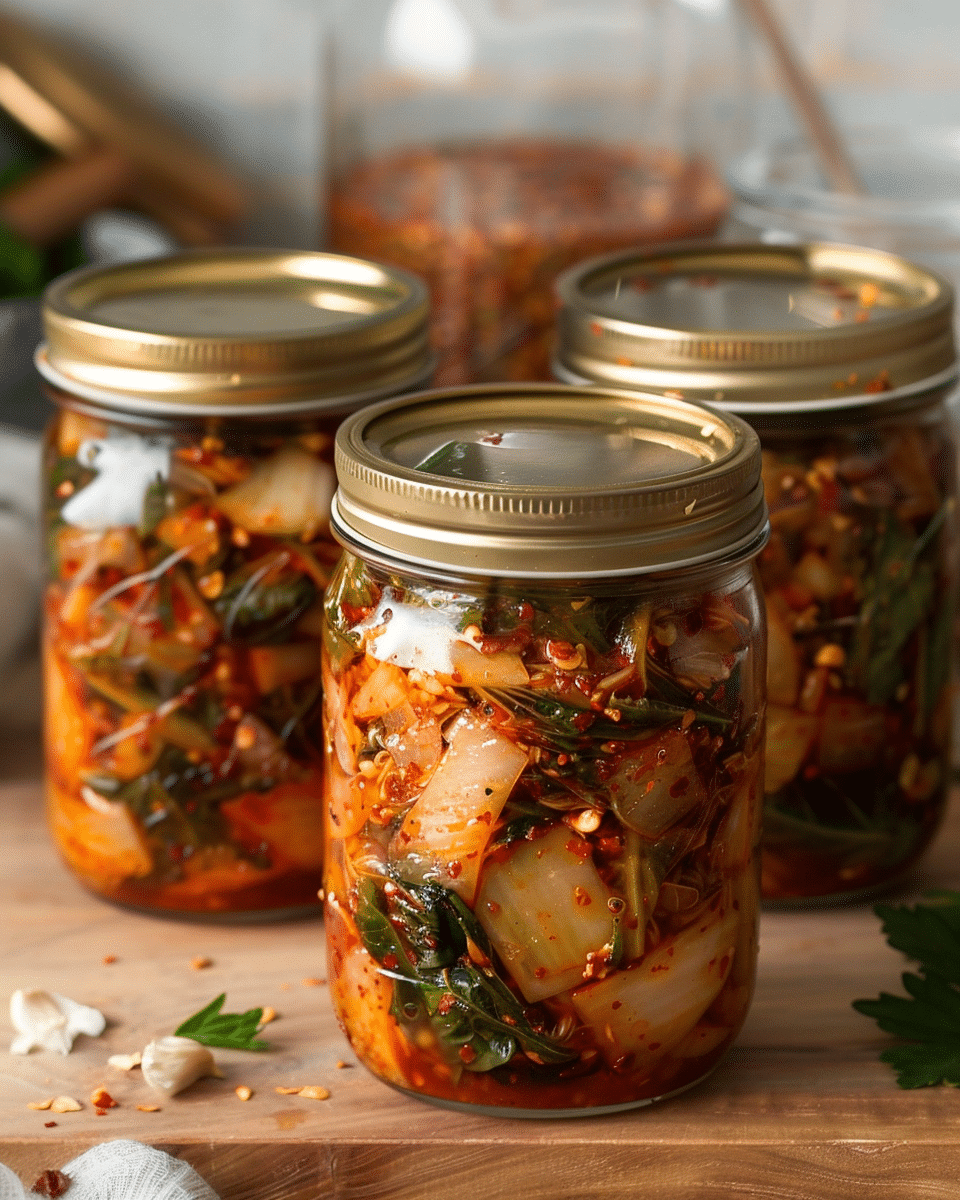
I make this easy vegan kimchi when I want something bold, tangy, and deeply flavorful without using any fish sauce. It’s a plant-based take on traditional kimchi that still delivers the rich umami flavor I love in fermented foods. With napa cabbage, Korean red pepper flakes, fresh aromatics, and a simple rice paste, I create a vibrant homemade kimchi that works beautifully as a side dish, topping, or flavor booster for many meals.
Why You’ll Love This Recipe
I love this recipe because it keeps the authentic spirit of kimchi while staying completely plant-based. The fermentation process creates a naturally tangy flavor and beneficial probiotics, and I find it surprisingly simple even for beginners.
I also enjoy how customizable it is. I can adjust the spice level, add more vegetables, or let it ferment longer for deeper flavor. Since the ingredients are fresh and wholesome, I end up with a vibrant condiment that enhances rice bowls, noodles, sandwiches, and more.
Another reason I return to this recipe often is that it stores well in the refrigerator and continues to develop flavor over time. I only need to make one batch to enjoy it for days.
Ingredients
(Tip: You’ll find the full list of ingredients and measurements in the recipe card below.)
2 pounds napa cabbage
1/4 cup sea salt
4 cups water
2 tablespoons sweet rice flour
1 cup water (for rice paste)
1 small apple or Asian pear, chopped
1/2 small onion, chopped
4 cloves garlic
1 tablespoon fresh ginger
1/3 to 1/2 cup Korean red pepper flakes (gochugaru)
1 teaspoon mushroom powder
1 cup Korean radish, julienned
1/2 cup carrot, julienned
1/2 cup Asian chives, cut into 1-inch pieces
Directions
I start by cutting the napa cabbage lengthwise into quarters and rinsing it thoroughly. Then I sprinkle the sea salt evenly between the cabbage leaves, focusing on the thicker stems. I let the cabbage sit for about 1 to 1½ hours, turning it halfway through until it softens.
After the cabbage softens, I rinse it under cold water two or three times to remove excess salt. I drain it well and set it aside.
Next, I prepare the rice paste. I whisk the sweet rice flour with 1 cup of water in a small saucepan and cook it over medium heat while stirring constantly. Once it thickens into a paste, I remove it from the heat and allow it to cool completely.
In a blender, I combine the apple or pear, chopped onion, garlic, and fresh ginger. I blend the mixture until it becomes smooth.
In a large bowl, I mix the cooled rice paste with the blended fruit and vegetable mixture. I then add the Korean red pepper flakes and mushroom powder, stirring everything together until fully combined.
I fold in the julienned Korean radish, carrot, and Asian chives to create the kimchi seasoning mixture.
Wearing gloves, I gently rub the seasoning paste between each cabbage leaf to ensure the mixture coats every layer.
Once the cabbage is fully seasoned, I tightly pack it into a clean glass jar or airtight container. I press it down firmly to remove air pockets.
I leave the jar at room temperature for 1 to 2 days to ferment, depending on how tangy I want the kimchi. After that, I transfer it to the refrigerator to slow the fermentation process.
I can serve it immediately for a fresh flavor, or I can let it ferment longer in the refrigerator to deepen the taste.
Servings and timing
This recipe makes about 8 servings.
Prep time: 45 minutes
Cooking time: 10 minutes
Total time: 1 hour 55 minutes
Each serving contains approximately 70 calories.
Variations
I sometimes experiment with this kimchi by adding extra vegetables for different textures and flavors. Thin slices of cucumber, daikon radish, or green onions blend well with the seasoning paste.
When I want a milder kimchi, I reduce the amount of gochugaru. For a spicier version, I increase it slightly or add a pinch of chili powder.
I also enjoy adding a little miso paste or soy sauce to deepen the umami flavor. Occasionally I include sesame seeds or a small amount of seaweed flakes for additional complexity.
Storage/Reheating
I store the kimchi in an airtight glass container in the refrigerator. The flavor continues to develop over time, and I find it tastes even better after several days.
Properly stored kimchi can last for about 3 to 4 weeks in the refrigerator. I always keep it tightly sealed to maintain freshness and prevent strong aromas from spreading in the fridge.
I usually enjoy kimchi cold or at room temperature, but I also add it directly to stir-fries, fried rice, soups, or noodle dishes where it gently warms during cooking.
Related Recipes:
FAQs
How do I know when the kimchi is fermented enough?
I usually taste the kimchi after about one day of fermentation. When it develops a slightly tangy and pleasantly sour flavor, I know the fermentation has started properly. If I want a stronger flavor, I simply let it ferment another day before refrigerating it.
Can I make this kimchi less spicy?
Yes, I often adjust the spice level by reducing the amount of gochugaru. Using closer to 1/3 cup produces a milder kimchi while still keeping the traditional flavor.
Why do I use sweet rice flour in kimchi?
I use sweet rice flour to create a thick paste that helps the seasoning stick to the cabbage leaves. It also provides a small amount of sugar that supports the fermentation process.
Do I need special fermentation equipment?
I do not need any special tools for this recipe. I simply use a clean glass jar or airtight container and press the cabbage down firmly to remove air pockets.
Can I eat the kimchi right away?
Yes, I can enjoy it immediately after preparing it if I prefer a fresher taste. However, I usually allow it to ferment for at least one day so the flavors become more complex.
Conclusion
I love making this easy vegan kimchi because it brings together bold spice, natural fermentation, and vibrant vegetables in one simple recipe. The process feels rewarding, and the result is a flavorful condiment that enhances many meals. Once I start making homemade kimchi, I find it hard to go back to store-bought versions because the fresh flavor and customizable spice level make it truly special.
📖 Recipe:
Print
Easy Vegan Kimchi
5 Stars 4 Stars 3 Stars 2 Stars 1 Star
No reviews
- Author: Isabella
- Total Time: 1 hour 55 minutes
- Yield: 8 servings
- Diet: Vegan
Description
This easy vegan kimchi is a bold, tangy, and flavorful fermented cabbage dish made without fish sauce. Packed with napa cabbage, Korean red pepper flakes, and fresh aromatics, it delivers traditional kimchi flavor in a completely plant-based form.
Ingredients
2 pounds napa cabbage
1/4 cup sea salt
4 cups water
2 tablespoons sweet rice flour
1 cup water (for rice paste)
1 small apple or Asian pear, chopped
1/2 small onion, chopped
4 cloves garlic
1 tablespoon fresh ginger
1/3 to 1/2 cup Korean red pepper flakes (gochugaru)
1 teaspoon mushroom powder
1 cup Korean radish, julienned
1/2 cup carrot, julienned
1/2 cup Asian chives, cut into 1-inch pieces
Instructions
- Cut the napa cabbage lengthwise into quarters and rinse thoroughly. Sprinkle sea salt evenly between the cabbage leaves, focusing on the thicker stems. Let sit for 1 to 1½ hours, turning halfway through, until the cabbage softens.
- Rinse the cabbage under cold water two or three times to remove excess salt. Drain well and set aside.
- In a small saucepan, whisk the sweet rice flour with 1 cup of water. Cook over medium heat, stirring constantly, until it thickens into a paste. Remove from heat and let cool completely.
- In a blender, combine the chopped apple or pear, onion, garlic, and fresh ginger. Blend until smooth.
- In a large bowl, mix the cooled rice paste with the blended fruit and vegetable mixture. Add the Korean red pepper flakes and mushroom powder and stir until well combined.
- Fold in the julienned Korean radish, carrot, and Asian chives to create the kimchi seasoning mixture.
- Wearing gloves, gently rub the seasoning paste between each cabbage leaf, ensuring every layer is well coated.
- Pack the seasoned cabbage tightly into a clean glass jar or airtight container, pressing down firmly to remove air pockets.
- Leave the jar at room temperature for 1 to 2 days to ferment, depending on desired tanginess.
- Transfer the kimchi to the refrigerator to slow fermentation. Serve immediately for a fresh taste or allow it to ferment longer in the refrigerator for deeper flavor.
Notes
Adjust spice level by using closer to 1/3 cup gochugaru for milder kimchi or increasing slightly for more heat.
Additional vegetables such as cucumber, daikon radish, or green onions can be added for variety.
A small amount of miso paste or soy sauce can deepen the umami flavor.
Store in an airtight glass container in the refrigerator for up to 3 to 4 weeks.
Kimchi can be eaten cold, at room temperature, or added to stir-fries, fried rice, soups, and noodle dishes.
- Prep Time: 45 minutes
- Cook Time: 10 minutes
- Category: Side Dish
- Method: Fermentation
- Cuisine: Korean
Nutrition
- Serving Size: 1 serving (about 1/2 cup)
- Calories: 70 kcal
- Sugar: 4 g
- Sodium: 900 mg
- Fat: 0.5 g
- Saturated Fat: 0 g
- Unsaturated Fat: 0.3 g
- Trans Fat: 0 g
- Carbohydrates: 15 g
- Fiber: 3 g
- Protein: 2 g
- Cholesterol: 0 mg