
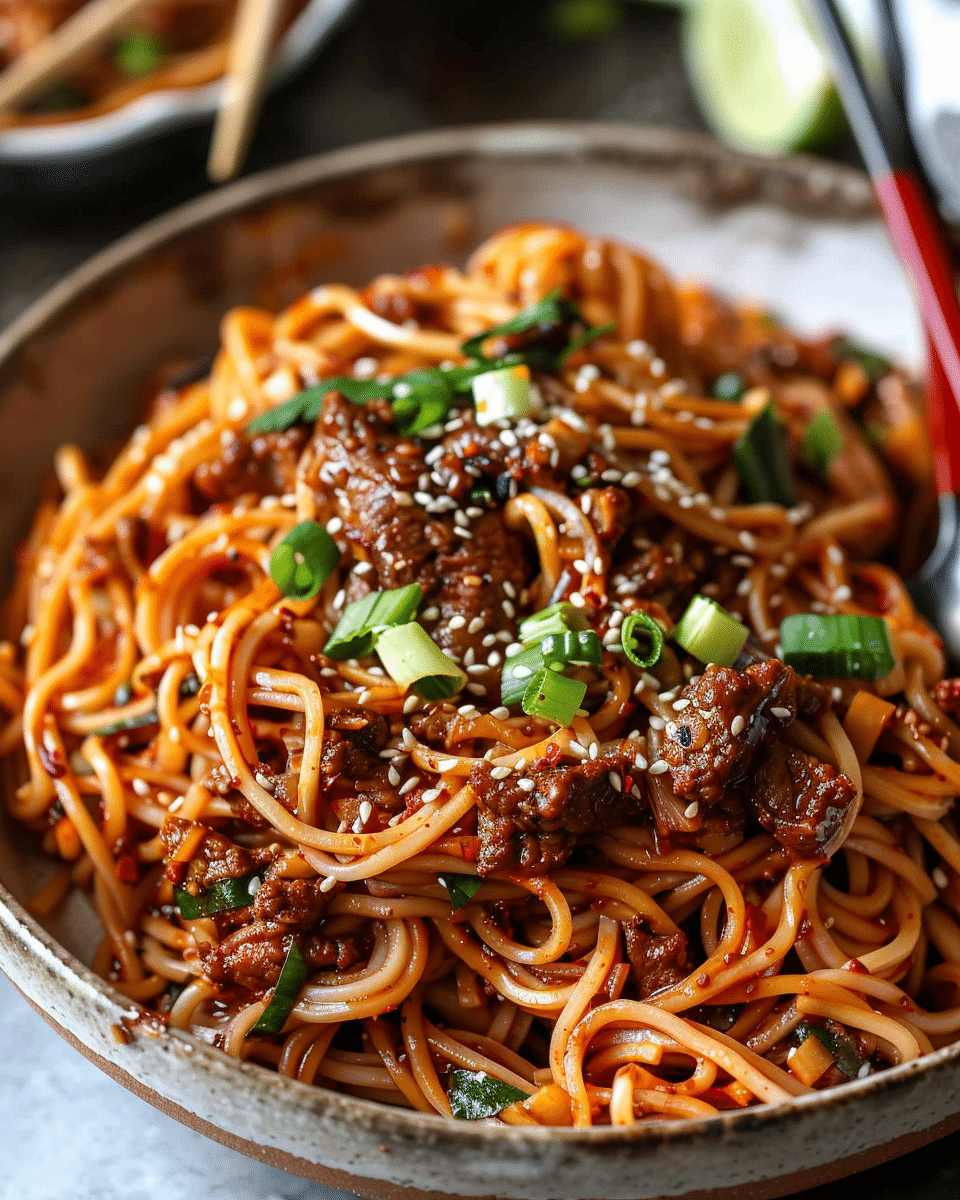
This Spicy Korean Gochujang Beef Noodles recipe is a bold and vibrant dish that brings together chewy noodles, tender marinated beef, and a fiery-sweet gochujang sauce. With deep umami, a punch of spice, and just enough sweetness, I find it the perfect comfort food when I’m craving something quick yet full of flavor.
Why You’ll Love This Recipe
I love how this dish strikes the perfect balance between spicy, sweet, and savory. It’s fast (ready in under 30 minutes), adaptable with whatever noodles or veggies I have on hand, and always satisfying. Whether I want a weeknight dinner with bold flavors or something to impress guests, this noodle stir-fry delivers every time.
Ingredients
(Tip: You’ll find the full list of ingredients and measurements in the recipe card below.)
For the Beef:
¾–1 lb flank steak or sirloin, thinly sliced
1 tbsp sesame oil
1 tbsp cornstarch
2 tbsp soy sauce
1 tsp garlic, minced
1 tsp ginger, minced
Optional: ½ tsp black pepper or gochugaru
For the Noodles:
8 oz noodles (udon, ramen, rice noodles, or spaghetti), cooked and drained
1 tbsp oil for stir-frying
For the Gochujang Sauce:
1 tbsp brown sugar or honey
1 tbsp rice vinegar or lime juice
2½ tbsp gochujang
1 tbsp water
1½ tbsp soy sauce
1 tsp sesame oil
Optional: 1 tsp chili crisp or gochugaru
Veggies (optional):
1 cup shredded cabbage or bok choy
1 carrot, julienned
½ bell pepper, thinly sliced
2 green onions, sliced
Handful of bean sprouts
For Garnish:
Sesame seeds
More green onions
Optional chili crisp or fried egg
Directions
Marinate the Beef:
I mix the sliced beef with soy sauce, sesame oil, cornstarch, garlic, ginger, and black pepper or gochugaru. I let it sit while I prep the other components.
Cook the Noodles:
I cook the noodles according to the package instructions, then drain and lightly toss with oil to keep them from sticking.
Make the Gochujang Sauce:
In a bowl, I whisk gochujang, soy sauce, brown sugar, vinegar or lime juice, water, and sesame oil. I taste and tweak—sometimes adding more gochujang for heat or sugar for balance.
Stir-Fry Everything:
I heat oil in a large pan or wok over high heat, then cook the beef for 2–3 minutes until just browned. I remove it and sauté the veggies (starting with firm ones). Then I return the beef, add the noodles and sauce, and toss everything for 1–2 minutes until glossy.
Garnish & Serve:
I top with sesame seeds, green onions, and maybe a fried egg or spoonful of chili crisp. It’s great with lime wedges or kimchi on the side.
Servings and Timing
Servings: 3–4
Prep Time: 10 minutes
Cook Time: 15–20 minutes
Total Time: 25–30 minutes
Variations
Vegetarian: I like using tofu or mushrooms in place of beef.
No gochujang? I mix sriracha with miso and a bit of sugar—it’s not quite the same, but still delicious.
Low-carb option: I swap in zucchini noodles or shirataki noodles.
Extra saucy: I double the gochujang sauce and thin it with broth for more coverage.
Storage/Reheating
This keeps well in the fridge for 3–4 days. When I reheat it, I prefer using a skillet with a splash of water or broth to bring it back to life. I avoid freezing the whole dish, as the noodles can get mushy. But I sometimes freeze the cooked beef and sauce separately for later use.
Related Recipes:
FAQs
What is gochujang and where can I find it?
Gochujang is a Korean fermented chili paste that’s spicy, slightly sweet, and packed with umami. I usually find it in the Asian section of the grocery store or at Korean markets.
Can I use a different protein instead of beef?
Absolutely. I’ve made this with chicken, shrimp, tofu, and even tempeh—it works great with all of them.
How spicy is this dish?
It’s moderately spicy. I control the heat by adjusting the amount of gochujang or skipping the chili crisp. For a milder version, I reduce the gochujang and add more sugar or honey.
Can I make this gluten-free?
Yes. I use gluten-free tamari instead of soy sauce and choose gluten-free noodles like rice noodles. I also double-check that my gochujang is labeled gluten-free.
What vegetables work best in this stir-fry?
I like using cabbage, carrots, bell peppers, and green onions, but I also throw in mushrooms, spinach, or whatever I have in the fridge. It’s very flexible.
Conclusion
This Spicy Korean Gochujang Beef Noodles recipe is one I keep coming back to when I want something bold and comforting. It’s quick, easy to customize, and absolutely packed with flavor. Whether I’m cooking for myself or serving a crowd, it’s always a hit—and never boring.
📖 Recipe:
Print
Spicy Korean Gochujang Beef Noodles
5 Stars 4 Stars 3 Stars 2 Stars 1 Star
No reviews
- Author: Isabella
- Total Time: 25–30 minutes
- Yield: 3–4 servings
- Diet: Halal
Description
A bold and flavorful noodle stir-fry featuring tender marinated beef, chewy noodles, and a spicy-sweet Korean gochujang sauce. Perfect for a quick weeknight meal full of umami and heat.
Ingredients
¾–1 lb flank steak or sirloin, thinly sliced
2 tbsp soy sauce (for beef)
1 tbsp sesame oil (for beef)
1 tbsp cornstarch
1 tsp garlic, minced
1 tsp ginger, minced
½ tsp black pepper or gochugaru (optional)
8 oz noodles (udon, ramen, rice noodles, or spaghetti), cooked and drained
1 tbsp oil for stir-frying
2½ tbsp gochujang
1½ tbsp soy sauce (for sauce)
1 tbsp brown sugar or honey
1 tbsp rice vinegar or lime juice
1 tbsp water
1 tsp sesame oil (for sauce)
1 tsp chili crisp or gochugaru (optional)
1 cup shredded cabbage or bok choy (optional)
1 carrot, julienned (optional)
½ bell pepper, thinly sliced (optional)
2 green onions, sliced (optional)
Handful of bean sprouts (optional)
Sesame seeds (for garnish)
More green onions (for garnish)
Optional chili crisp or fried egg (for garnish)
Instructions
- In a bowl, mix the sliced beef with soy sauce, sesame oil, cornstarch, garlic, ginger, and black pepper or gochugaru. Set aside to marinate.
- Cook the noodles according to package instructions. Drain and toss lightly with oil to prevent sticking.
- Whisk together gochujang, soy sauce, brown sugar, rice vinegar or lime juice, water, and sesame oil to make the sauce. Adjust to taste.
- Heat oil in a large skillet or wok over high heat. Stir-fry the marinated beef for 2–3 minutes until browned. Remove from pan.
- Add vegetables to the same pan and sauté until slightly tender, starting with firmer veggies first.
- Return the beef to the pan, add cooked noodles and sauce, and toss everything together for 1–2 minutes until evenly coated and glossy.
- Serve hot, garnished with sesame seeds, green onions, and optionally a fried egg or chili crisp.
Notes
Use any noodles you have on hand—udon, ramen, rice noodles, or even spaghetti work well.
Make it vegetarian by using tofu or mushrooms instead of beef.
Double the sauce and thin with broth if you prefer a saucier dish.
Store leftovers in the fridge for up to 4 days. Reheat in a skillet with a splash of water or broth.
Use gluten-free tamari and noodles for a gluten-free version.
- Prep Time: 10 minutes
- Cook Time: 15–20 minutes
- Category: Main Dish
- Method: Stir-Fry
- Cuisine: Korean
Nutrition
- Serving Size: 1 serving
- Calories: 450
- Sugar: 7g
- Sodium: 900mg
- Fat: 18g
- Saturated Fat: 5g
- Unsaturated Fat: 11g
- Trans Fat: 0g
- Carbohydrates: 45g
- Fiber: 3g
- Protein: 28g
- Cholesterol: 60mg