

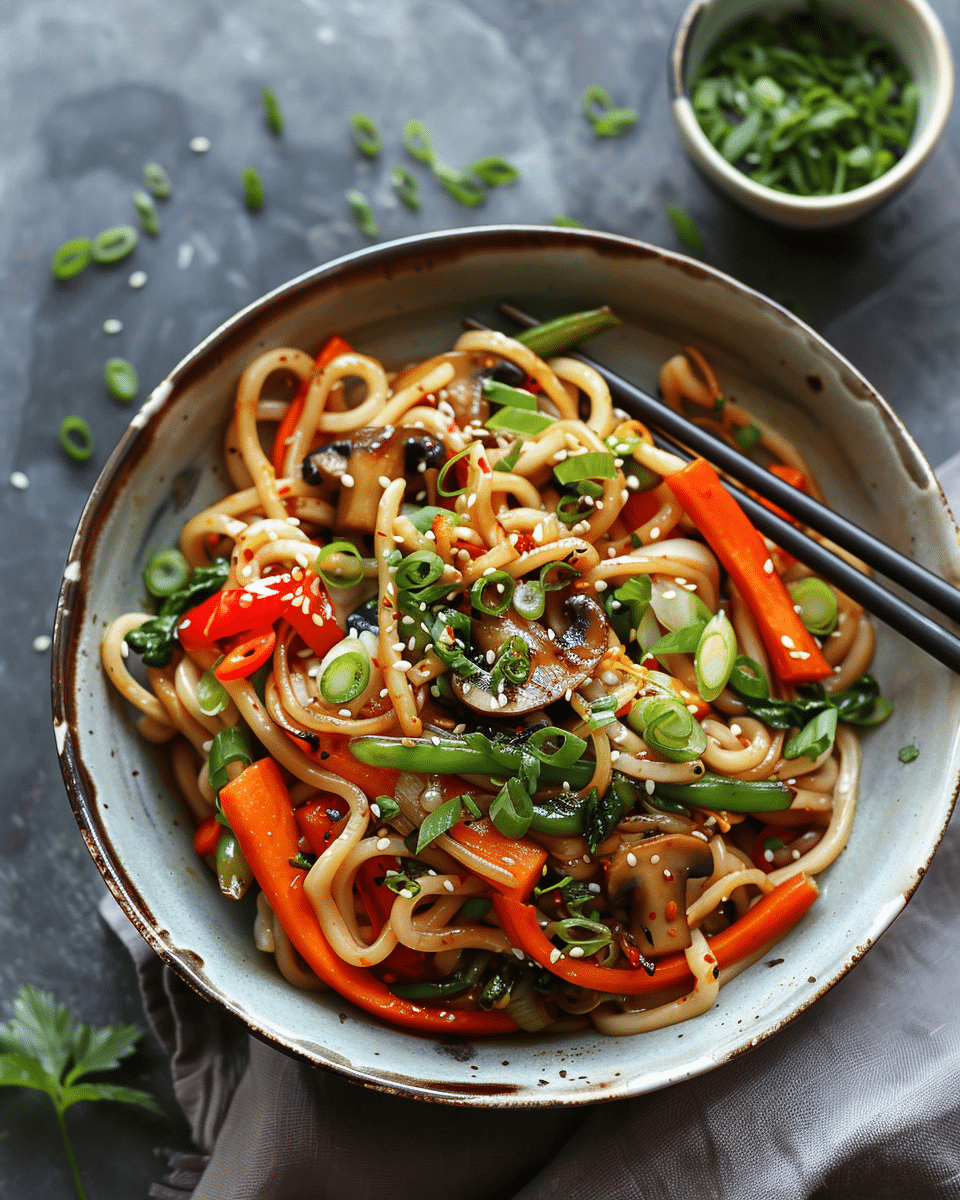
Yaki Udon Noodles with Savory Stir-Fried Vegetables a thick, chewy udon noodles come together with stir-fried vegetables and a deeply flavorful soy-based sauce in this comforting Japanese-inspired dish. Whether I add tofu, shrimp, chicken, or keep it plant-based, this stir-fry is quick, hearty, and satisfying—perfect for a weeknight dinner that doesn’t skimp on taste.
Why You’ll Love This Recipe
I love how this yaki udon recipe blends texture and umami in every bite. The thick udon noodles soak up a savory sauce with just the right balance of soy, oyster sauce, and mirin. Crisp-tender vegetables bring freshness and crunch, while the optional protein makes it customizable depending on what I have on hand. Plus, it comes together in under 30 minutes with minimal prep—ideal when I need something quick but flavorful.
Ingredients
(Tip: You’ll find the full list of ingredients and measurements in the recipe card below.)
7 oz (200g) fresh or frozen udon noodles
1 tablespoon sesame oil
1/2 onion, thinly sliced
2 cloves garlic, minced
1/2 cup shredded cabbage
1/2 cup julienned carrots
1 tablespoon oyster sauce (or vegan alternative)
1/2 cup sliced shiitake mushrooms
1 green onion, chopped
2 tablespoons soy sauce
1 teaspoon mirin (optional)
1 teaspoon sugar
1/2 teaspoon rice vinegar
1/4 teaspoon black pepper
Optional: tofu, chicken, shrimp, or beef slices
Directions
I prepare the udon noodles according to the package instructions. If I’m using frozen noodles, I boil them for 1–2 minutes until loosened, then drain and set aside.
In a small bowl, I whisk together the soy sauce, oyster sauce, mirin, sugar, rice vinegar, and black pepper.
I heat sesame oil in a large skillet or wok over medium-high heat.
Then I add the sliced onion and sauté for 1–2 minutes until it begins to soften, then add the garlic and cook for 30 seconds more.
I toss in the cabbage, carrots, and shiitake mushrooms, stir-frying for 3–4 minutes until the vegetables are tender-crisp.
If I’m using protein, I add it at this stage and stir-fry until fully cooked.
I add the cooked udon noodles to the pan, pouring the prepared sauce over the top.
Next I use tongs or chopsticks to toss everything together, ensuring the noodles are coated evenly.
I cook for another 1–2 minutes until the sauce slightly thickens and the noodles are hot.
I garnish with chopped green onions and serve immediately.
Servings and timing
Servings: 2 servings
Prep Time: 10 minutes
Cooking Time: 10 minutes
Total Time: 20 minutes
Calories: Approximately 320 kcal per serving
Variations
Spicy Kick: I sometimes add a dash of chili oil or a spoonful of gochujang for extra heat.
Vegan Version: I use a vegan oyster sauce and tofu as my protein choice.
Gluten-Free: I swap out regular udon for gluten-free rice noodles and use tamari instead of soy sauce.
Extra Veggies: I like to add bell peppers, snap peas, or baby spinach when I want to boost the greens.
Peanut Twist: Occasionally, I stir in a spoonful of peanut butter to the sauce for a creamy, nutty variation.
Storage/Reheating
I store leftovers in an airtight container in the refrigerator for up to 3 days. To reheat, I warm it in a skillet over medium heat with a splash of water or soy sauce to loosen the noodles. Microwaving works too, but I prefer the stovetop method for better texture.
Related Recipes:
FAQs
How do I keep the noodles from sticking together?
I make sure to rinse the noodles briefly after cooking (if not using fresh) and toss them with a little oil before stir-frying. This helps prevent clumping.
Can I make this ahead of time?
Yes, but I prefer to stir-fry the vegetables and sauce separately and cook the noodles just before serving for the best texture.
What kind of protein works best in this recipe?
I often use tofu for a plant-based option, but shrimp, thinly sliced beef, or chicken work equally well. Just make sure the protein is cooked thoroughly before adding the noodles.
Is mirin necessary?
Mirin adds a subtle sweetness and depth, but I’ve made this dish without it and still enjoyed it. A tiny splash of white wine or more sugar can be a substitute in a pinch.
Can I freeze yaki udon?
I don’t recommend freezing it, as the noodles can become mushy when thawed. It’s best enjoyed fresh or within a couple of days refrigerated.
Conclusion
Yaki udon is one of those meals I turn to when I want something hearty, fast, and full of flavor. With chewy noodles, crisp vegetables, and a savory sauce that brings everything together, it checks all the boxes for a satisfying dinner. Whether I keep it meatless or add my favorite protein, this dish never disappoints—and it always hits the spot.
📖 Recipe:
Print
Yaki Udon Noodles with Savory Stir-Fried Vegetables
5 Stars 4 Stars 3 Stars 2 Stars 1 Star
No reviews
- Author: Isabella
- Total Time: 20 minutes
- Yield: 2 servings
- Diet: Vegetarian
Description
Yaki Udon is a quick and hearty Japanese stir-fry dish featuring thick, chewy udon noodles, stir-fried vegetables, and a savory soy-based sauce. Customizable with your choice of protein or kept plant-based, it’s perfect for a satisfying weeknight dinner.
Ingredients
7 oz (200g) fresh or frozen udon noodles
1 tablespoon sesame oil
1/2 onion, thinly sliced
2 cloves garlic, minced
1/2 cup shredded cabbage
1/2 cup julienned carrots
1/2 cup sliced shiitake mushrooms
1 green onion, chopped
2 tablespoons soy sauce
1 tablespoon oyster sauce (or vegan alternative)
1 teaspoon mirin (optional)
1 teaspoon sugar
1/2 teaspoon rice vinegar
1/4 teaspoon black pepper
Optional: tofu, chicken, shrimp, or beef slices
Instructions
- Cook the udon noodles according to package instructions. If using frozen noodles, boil for 1–2 minutes until loosened, then drain and set aside.
- In a small bowl, whisk together soy sauce, oyster sauce, mirin, sugar, rice vinegar, and black pepper. Set aside.
- Heat sesame oil in a large skillet or wok over medium-high heat.
- Add sliced onion and sauté for 1–2 minutes until softened. Add garlic and cook for 30 seconds more.
- Add cabbage, carrots, and shiitake mushrooms. Stir-fry for 3–4 minutes until vegetables are tender-crisp.
- If using protein, add it now and cook until fully cooked through.
- Add the cooked udon noodles to the pan and pour the prepared sauce over them.
- Use tongs or chopsticks to toss everything together until noodles are evenly coated.
- Cook for another 1–2 minutes until the sauce thickens slightly and the noodles are heated through.
- Garnish with chopped green onions and serve immediately.
Notes
Add chili oil or gochujang for a spicy version.
Use vegan oyster sauce and tofu for a vegan variation.
Swap in gluten-free noodles and tamari for a gluten-free version.
Extra veggies like bell peppers or spinach can be added.
Stir in peanut butter for a creamy, nutty twist.
Store leftovers in the fridge for up to 3 days.
Reheat on the stovetop with a splash of water or soy sauce for best texture.
- Prep Time: 10 minutes
- Cook Time: 10 minutes
- Category: Main Dish
- Method: Stir-Fry
- Cuisine: Japanese
Nutrition
- Serving Size: 1 serving
- Calories: 320
- Sugar: 4g
- Sodium: 720mg
- Fat: 9g
- Saturated Fat: 1g
- Unsaturated Fat: 7g
- Trans Fat: 0g
- Carbohydrates: 48g
- Fiber: 4g
- Protein: 8g
- Cholesterol: 0mg