
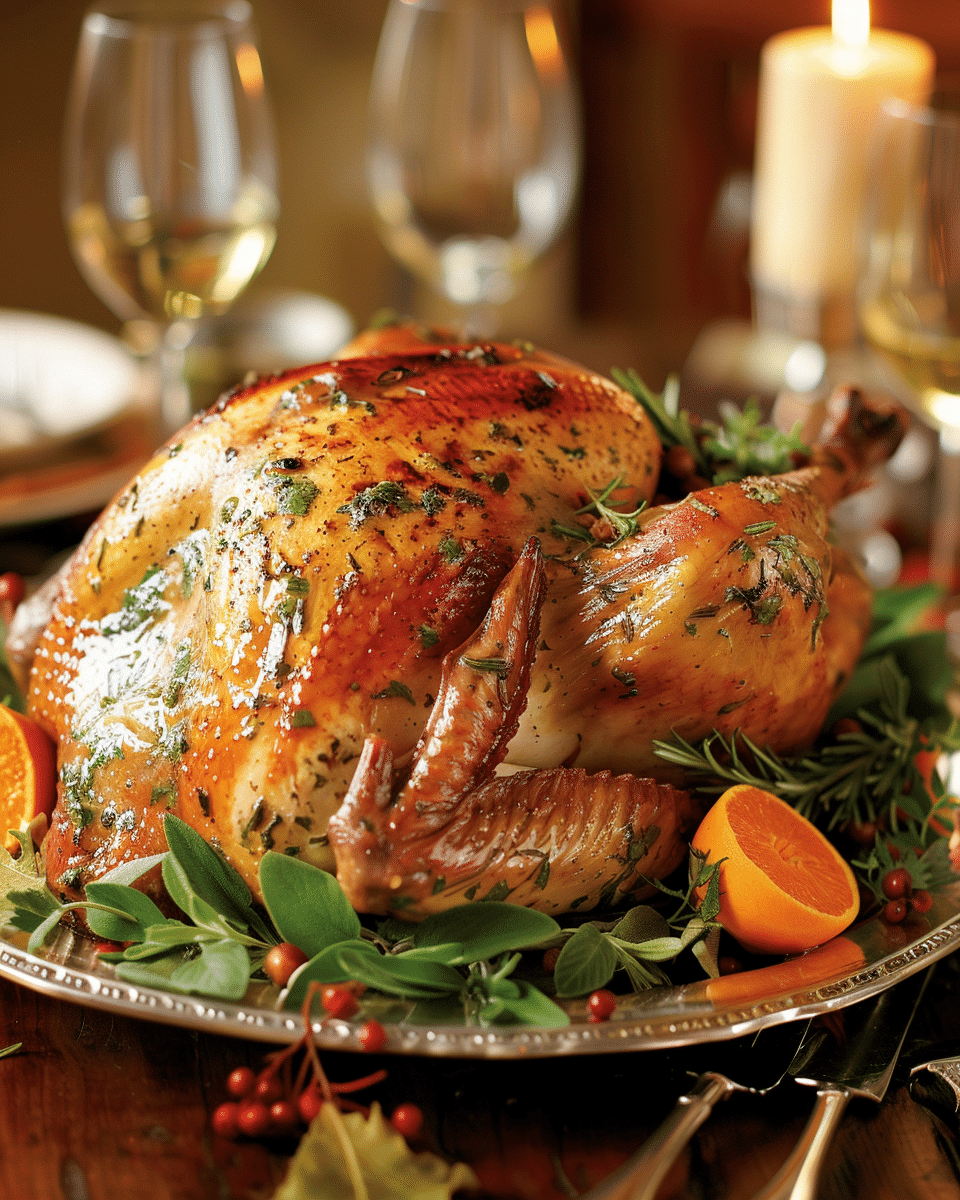
This Classic Thanksgiving Roast Turkey is the kind of centerpiece I love serving when I want a traditional holiday meal that feels special without being overly complicated. I coat the turkey with a rich herb butter flavored with garlic, rosemary, thyme, and sage, then roast it slowly until the skin turns beautifully golden and the meat stays tender and juicy.
I also fill the cavity with fresh lemon, onion, and garlic, which adds wonderful aroma as the turkey roasts. With plenty of savory pan juices and classic holiday herbs, I find this recipe works especially well for Thanksgiving, Christmas, or any large family dinner.
Why You’ll Love This Recipe
I love this roast turkey because it uses familiar ingredients while still producing an impressive holiday centerpiece. The herb butter gives the skin plenty of flavor and helps it develop that beautiful golden finish I look for in a traditional roast turkey.
I also like that most of the preparation happens before the turkey goes into the oven. Once it starts roasting, I only need to baste it periodically and monitor the internal temperature. The lemon, onion, and garlic tucked inside the cavity provide extra flavor without requiring complicated preparation.
Another reason I make this recipe for holiday gatherings is its generous size. A 5–7 kg turkey provides enough meat for a large family dinner and can leave me with delicious leftovers for sandwiches, soups, casseroles, and other meals.
Ingredients
(Tip: You’ll find the full list of ingredients and measurements in the recipe card below.)
1 whole turkey (5–7 kg), thawed
1 cup unsalted butter, softened
2 tablespoons olive oil
1 tablespoon salt
1 tablespoon garlic powder
2 teaspoons black pepper
1 tablespoon onion powder
1 tablespoon dried thyme
3 cups chicken broth
1 tablespoon dried rosemary
1 tablespoon dried sage
Fresh parsley, optional, for garnish
1 lemon, halved
1 onion, quartered
One head garlic, halved
Directions
Prepare the Oven and Turkey:
I preheat my oven to 165°C (325°F) and place a roasting rack inside a large roasting pan. Then I remove any packaging and giblets from the turkey, then pat the turkey thoroughly dry with paper towels. I find that removing as much surface moisture as possible helps the skin become crisp and golden while roasting.
Make the Herb Butter:
In a bowl, I combine the softened butter with the olive oil, salt, black pepper, garlic powder, onion powder, dried thyme, rosemary, and sage. I mix everything until the herbs and seasonings are evenly distributed throughout the butter.
Season the Turkey:
I carefully loosen the skin over the turkey breast without tearing it. I spread some of the herb butter underneath the skin so the seasoning sits directly against the meat. Then I rub the remaining herb butter generously over the outside of the turkey, including the breasts, legs, and wings.
Fill the Cavity:
I place the lemon halves, quartered onion, and halved head of garlic inside the turkey cavity. I use these ingredients mainly as aromatics, allowing their flavors to gently perfume the turkey as it cooks.
Prepare for Roasting:
I place the seasoned turkey breast-side up on the prepared roasting rack. Then I pour the chicken broth into the bottom of the roasting pan, keeping it underneath the rack rather than pouring it directly over the seasoned turkey.
Roast the Turkey:
I transfer the turkey to the preheated oven and roast it for approximately 13–15 minutes per pound. For a turkey of this size, I plan on roughly 4 hours, although the exact cooking time can vary.
I baste the turkey with the pan juices about every 45 minutes. If I notice the skin becoming too dark before the meat is fully cooked, I loosely tent the top with aluminum foil.
Check for Doneness:
Rather than relying only on cooking time, I use a meat thermometer to determine when my turkey is ready. I check the thickest part of the thigh without touching the bone and make sure it reaches at least 74°C (165°F).
Rest and Carve:
Once cooked, I remove the turkey from the oven and let it rest for at least 25–30 minutes before carving. I find this resting period especially important because it allows the juices to redistribute through the meat instead of immediately running out when I carve it.
I garnish the finished turkey with fresh parsley when I want a little extra color before bringing it to the table.
Servings and Timing
This recipe makes approximately 10 servings, making it a great choice for a Thanksgiving dinner or another large holiday gathering.
Prep Time: 30 minutes
Cooking Time: Approximately 4 hours
Total Time: Approximately 4 hours 30 minutes
Resting Time: 25–30 minutes
Servings: 10
Calories: Approximately 520 kcal per serving
I keep in mind that turkey cooking times are estimates. The size and shape of the bird, its starting temperature, and individual oven differences can all affect the final roasting time, so I always use the internal temperature as my main guide.
Variations
For a fresh herb turkey, I replace the dried thyme, rosemary, and sage with finely chopped fresh herbs. I especially like this version when I have fresh herbs available during the holidays.
For a citrus variation, I add orange wedges along with the lemon inside the cavity. The orange gives the turkey a slightly sweeter citrus aroma that pairs nicely with rosemary and sage.
When I want stronger garlic flavor, I mix several cloves of finely minced or grated fresh garlic directly into the herb butter.
For a slightly smoky flavor, I add a small amount of smoked paprika to my herb butter. It also deepens the color of the roasted skin.
I can also change the broth depending on what I have available. Turkey stock works particularly well, while a good-quality vegetable broth can be used when I don’t have chicken broth on hand.
Storage/Reheating
I remove leftover turkey meat from the bones and transfer it to airtight containers before refrigerating it. Properly refrigerated cooked turkey is best used within 3–4 days.
For longer storage, I portion the cooked turkey into freezer-safe containers or bags. I like adding a small spoonful of pan juices or broth before freezing because it helps protect the meat from drying out. I can freeze the cooked turkey for longer storage and thaw it in the refrigerator before reheating.
When reheating turkey in the oven, I place the sliced meat in a baking dish with a splash of chicken broth or reserved pan juices. I cover the dish with foil and warm it at a moderate temperature until heated through.
For smaller portions, I use the microwave. I place the turkey on a microwave-safe plate, add a little broth, cover it loosely, and heat it in short intervals until thoroughly hot.
Related Recipes:
FAQs
How do I keep my Thanksgiving turkey juicy?
I avoid overcooking it and use a meat thermometer rather than relying entirely on roasting time. I also spread herb butter underneath the skin and allow the finished turkey to rest for 25–30 minutes before carving. These steps help me keep more moisture in the meat.
Do I need to baste the turkey while it roasts?
I like to baste my turkey approximately every 45 minutes using the juices from the bottom of the roasting pan. It adds flavor to the surface, although I avoid opening the oven excessively because every opening allows heat to escape.
How do I get crispy, golden turkey skin?
I start by patting the turkey very dry with paper towels. I then coat the exterior with herb butter and olive oil. Keeping the skin relatively dry before adding the fat helps me achieve a more attractive golden finish during roasting.
How do I know when my roast turkey is done?
I use an instant-read or meat thermometer and check the thickest part of the thigh without touching the bone. And I make sure the turkey reaches a safe internal temperature of at least 74°C (165°F). I check more than one area when necessary rather than judging doneness by skin color alone.
What can I do with leftover roast turkey?
I use leftover turkey in sandwiches, wraps, soups, pot pies, casseroles, salads, pasta dishes, and turkey-and-gravy meals. I also like saving the bones and carcass for making homemade turkey stock, which makes the most of the entire bird.
Conclusion
This Classic Thanksgiving Roast Turkey gives me everything I look for in a traditional holiday centerpiece: golden skin, juicy meat, savory herbs, and the comforting aromas of garlic, onion, lemon, rosemary, thyme, and sage.
I especially like that the recipe keeps the preparation straightforward while still creating a turkey worthy of the center of a Thanksgiving table. With flavorful herb butter, aromatic vegetables, plenty of pan juices, and enough resting time before carving, I can serve a classic roast turkey that pairs beautifully with stuffing, mashed potatoes, gravy, cranberry sauce, and all my favorite holiday side dishes.
📖 Recipe:
Print
Classic Thanksgiving Roast Turkey
- Total Time: 4 hours 30 minutes
- Yield: 10 servings
- Diet: Low Calorie
Description
A classic holiday roast turkey coated in savory garlic herb butter and filled with lemon, onion, and garlic. Slow roasting creates golden skin and tender, juicy meat for a traditional Thanksgiving centerpiece.
Ingredients
1 whole turkey (5–7 kg), thawed
1 cup unsalted butter, softened
2 tablespoons olive oil
1 tablespoon salt
2 teaspoons black pepper
1 tablespoon garlic powder
1 tablespoon onion powder
1 tablespoon dried thyme
1 tablespoon dried rosemary
1 tablespoon dried sage
1 lemon, halved
1 onion, quartered
1 head garlic, halved
3 cups chicken broth
Fresh parsley, optional, for garnish
Instructions
- Preheat the oven to 165°C (325°F) and place a roasting rack inside a large roasting pan. Remove the packaging and giblets from the turkey, then pat the turkey thoroughly dry with paper towels.
- Combine the softened butter, olive oil, salt, black pepper, garlic powder, onion powder, dried thyme, dried rosemary, and dried sage in a bowl. Mix until evenly combined.
- Carefully loosen the skin over the turkey breast without tearing it. Spread some of the herb butter underneath the skin, then rub the remaining herb butter generously over the outside of the turkey, including the breasts, legs, and wings.
- Place the lemon halves, quartered onion, and halved head of garlic inside the turkey cavity.
- Place the turkey breast-side up on the roasting rack. Pour the chicken broth into the bottom of the roasting pan, underneath the rack.
- Roast for approximately 13–15 minutes per pound, or about 4 hours for a turkey of this size. Baste with the pan juices approximately every 45 minutes. If the skin becomes too dark before the turkey is cooked through, loosely tent it with aluminum foil.
- Check the thickest part of the thigh with a meat thermometer without touching the bone. The turkey is done when it reaches at least 74°C (165°F). Check additional areas as needed to confirm doneness.
- Remove the turkey from the oven and rest for 25–30 minutes before carving. Garnish with fresh parsley if desired and serve.
Notes
Cooking time is an estimate; always use the internal temperature as the primary guide for doneness.
For fresh herbs, replace the dried thyme, rosemary, and sage with finely chopped fresh herbs.
For extra citrus aroma, add orange wedges to the cavity along with the lemon.
For stronger garlic flavor, mix several cloves of finely minced or grated fresh garlic into the herb butter.
Add a small amount of smoked paprika to the herb butter for a slightly smoky flavor and deeper skin color.
Turkey stock or vegetable broth can be substituted for the chicken broth.
Store leftover turkey meat in airtight containers in the refrigerator and use within 3–4 days.
For freezing, portion the turkey into freezer-safe containers or bags with a little pan juice or broth to help prevent drying.
Reheat sliced turkey covered with foil and a splash of broth or pan juices until thoroughly hot.
- Prep Time: 30 minutes
- Cook Time: 4 hours
- Category: Main Course
- Method: Roasting
- Cuisine: American
Nutrition
- Serving Size: 1 serving
- Calories: 520 kcal
- Sugar: 1 g
- Sodium: 900 mg
- Fat: 28 g
- Saturated Fat: 12 g
- Unsaturated Fat: 13 g
- Trans Fat: 0.5 g
- Carbohydrates: 3 g
- Fiber: 1 g
- Protein: 62 g
- Cholesterol: 210 mg