
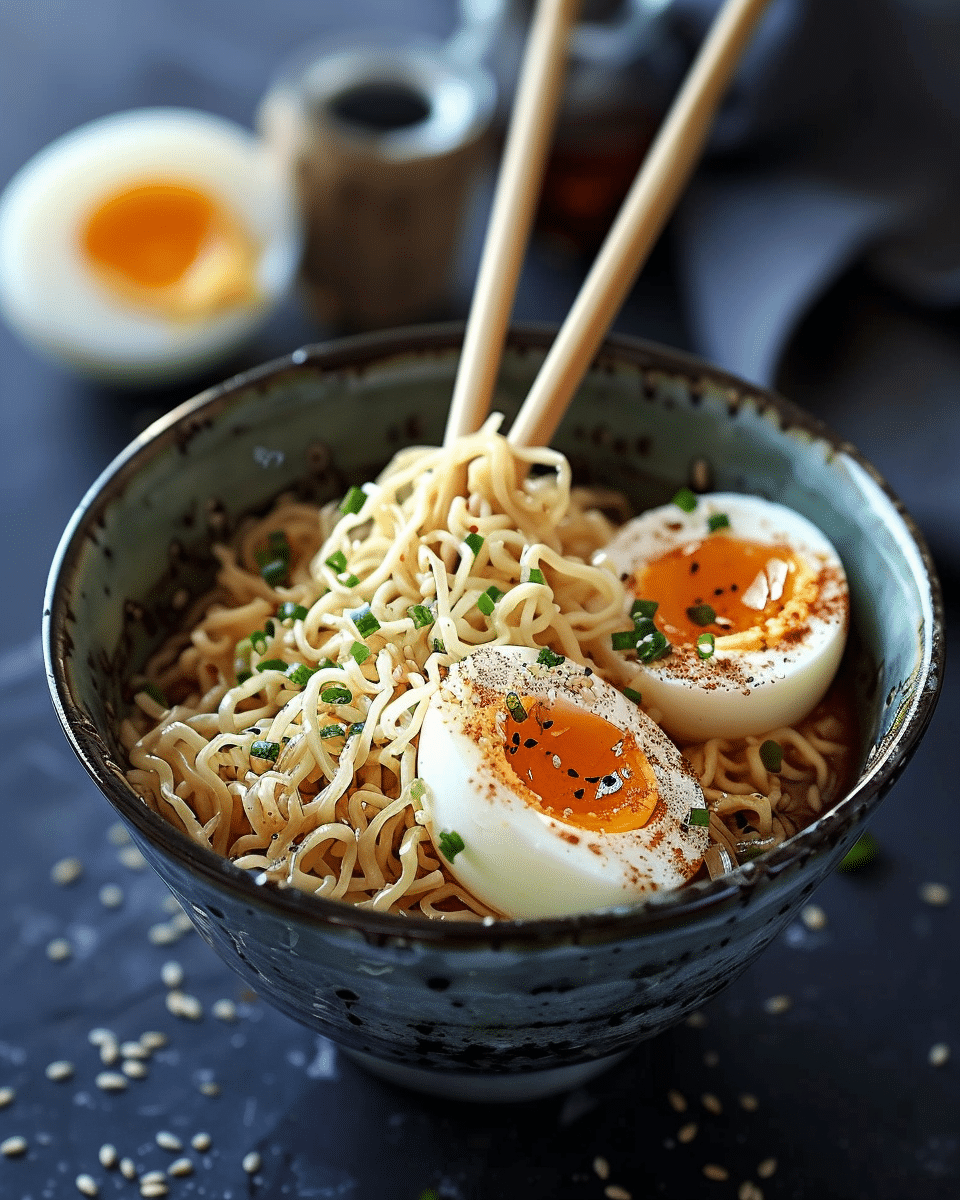
Savory, jammy soy sauce ramen eggs are a classic Japanese-inspired Soy Sauce Ramen Eggs treat. These soft-boiled eggs are marinated in a flavorful blend of soy sauce, mirin, vinegar, and aromatics, making them the perfect addition to ramen bowls, rice dishes, or simply enjoyed as a protein-packed snack. I love how simple they are to prepare, yet the depth of umami flavor is incredible.
Why You’ll Love This Recipe
I always keep a batch of these soy sauce eggs in the fridge because they’re:
Incredibly easy to make with just a few pantry ingredients
Packed with umami and deeply flavorful
Versatile — ideal for ramen, rice bowls, or on toast
A great meal prep option that gets better with time
A high-protein, low-effort snack I can grab anytime
Ingredients
(Tip: You’ll find the full list of ingredients and measurements in the recipe card below.)
4 large eggs
1/2 cup soy sauce
1 tablespoon rice vinegar
1 tablespoon mirin (or I use a bit of sugar if I’m out of mirin)
1/2 cup water
1 clove garlic, smashed
1 slice fresh ginger
Optional: 1 teaspoon sugar
Directions
I bring a medium pot of water to a boil.
Using a spoon, I gently lower the eggs into the boiling water. I boil them for 6.5 to 7 minutes to get that perfect soft, jammy yolk.
I immediately transfer the eggs to an ice bath and let them cool for 5 to 10 minutes before peeling.
In a bowl or resealable bag, I combine soy sauce, water, rice vinegar, mirin, garlic, ginger, and sugar if using.
I place the peeled eggs into the marinade, ensuring they’re fully submerged.
Then I refrigerate them for at least 4 hours, but I prefer leaving them overnight for deeper flavor.
I slice them in half right before serving and add them to ramen or rice, or just snack on them as is.
Servings and timing
Servings: 4
Prep Time: 10 minutes
Cooking Time: 7 minutes
Total Time: 17 minutes + marinating time
Calories: 90 kcal per serving
Variations
Spicy kick: I sometimes add a bit of chili oil or a sliced chili pepper to the marinade.
Sweeter flavor: I increase the mirin or sugar slightly if I’m craving a hint of sweetness.
Deeper umami: A splash of dashi or mushroom soy sauce can add extra complexity.
Soy-free option: For a gluten-free version, I swap in tamari.
Tea-infused: I’ve infused the marinade with black tea before — it adds a subtle earthy tone.
Storage/Reheating
I store the marinated eggs in the fridge in their marinade for up to 3-4 days. The flavor continues to develop over time. I don’t reheat them — they’re best served cold or at room temperature. If I’m using them for ramen, I let them sit out while I prepare the rest of the dish so they warm slightly.
Related Recipes:
- Easy Peanut Butter Ramen Noodles
- Crunchy Ramen Noodle Salad
- Fiery Chicken Ramen with Creamy Garlic Sauce
FAQs
How long can I marinate ramen eggs?
I usually marinate them for at least 4 hours, but they taste best after 12–24 hours. I don’t leave them in the marinade for more than 3 days, as the flavor can become too strong.
Can I reuse the marinade?
I don’t recommend reusing the marinade as is because of potential contamination from the eggs. However, I sometimes boil it, strain it, and reuse it once more with a fresh batch of eggs.
Why are my yolks too runny or firm?
Timing is everything. I boil mine for exactly 6.5 to 7 minutes for a jammy texture. If they’re too runny, I try adding 30 seconds next time. If they’re firm, I reduce the boiling time slightly.
Can I make these without mirin?
Yes, I’ve used a bit of sugar in place of mirin and it works well. It won’t have quite the same depth, but it’s still delicious.
Do I need to peel the eggs before marinating?
Yes, I always peel them before marinating so they absorb the flavor properly. Peeling them while still slightly warm (after the ice bath) helps avoid tearing.
Conclusion
These soy sauce ramen eggs are one of those little recipes I come back to again and again. They’re simple, flavorful, and elevate any meal I add them to. Whether I’m building a bowl of ramen or just looking for a quick snack, these eggs never disappoint.
📖 Recipe:
Print
Soy Sauce Ramen Eggs
5 Stars 4 Stars 3 Stars 2 Stars 1 Star
No reviews
- Author: Isabella
- Total Time: 17 minutes + marinating time
- Yield: 4 servings
- Diet: Low Calorie
Description
Savory, jammy soy sauce ramen eggs are a Japanese-inspired snack made by marinating soft-boiled eggs in a flavorful blend of soy sauce, mirin, vinegar, and aromatics. Perfect for ramen, rice bowls, or as a protein-rich snack.
Ingredients
4 large eggs
1/2 cup soy sauce
1/2 cup water
1 tablespoon rice vinegar
1 tablespoon mirin (or 1 teaspoon sugar if mirin is unavailable)
1 clove garlic, smashed
1 slice fresh ginger
Optional: 1 teaspoon sugar
Instructions
- Bring a medium pot of water to a boil.
- Gently lower the eggs into the boiling water using a spoon.
- Boil the eggs for 6.5 to 7 minutes for soft, jammy yolks.
- Transfer the eggs to an ice bath and cool for 5–10 minutes.
- Peel the eggs carefully.
- In a bowl or resealable bag, combine soy sauce, water, rice vinegar, mirin (or sugar), garlic, ginger, and optional sugar.
- Place the peeled eggs into the marinade, ensuring they are fully submerged.
- Refrigerate for at least 4 hours or overnight for deeper flavor.
- Slice in half before serving with ramen, rice, or as a snack.
Notes
Add chili oil or sliced chili for a spicy variation.
Use extra mirin or sugar for a sweeter flavor profile.
Enhance umami with a splash of dashi or mushroom soy sauce.
Use tamari for a gluten-free/soy-free alternative.
Try infusing the marinade with black tea for earthy flavor.
Store in the fridge in marinade for up to 3–4 days.
Serve cold or at room temperature; no reheating needed.
- Prep Time: 10 minutes
- Cook Time: 7 minutes
- Category: Snack
- Method: Boiled
- Cuisine: Japanese
Nutrition
- Serving Size: 1 egg
- Calories: 90
- Sugar: 1g
- Sodium: 600mg
- Fat: 6g
- Saturated Fat: 2g
- Unsaturated Fat: 4g
- Trans Fat: 0g
- Carbohydrates: 2g
- Fiber: 0g
- Protein: 6g
- Cholesterol: 185mg