
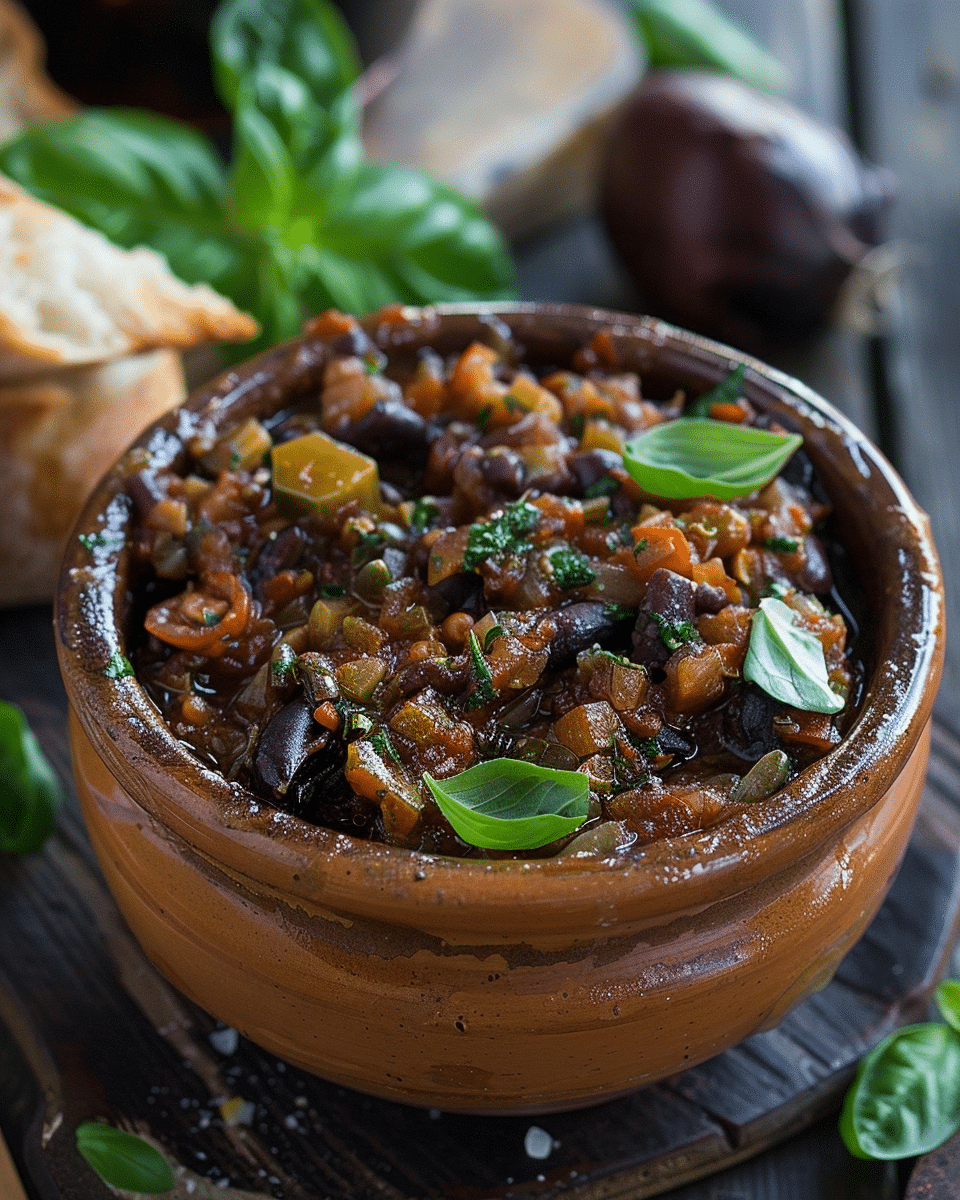
Authentic Sicilian Caponata is one of my favorite Mediterranean dishes, bringing together tender eggplant, juicy tomatoes, crunchy celery, briny olives, and capers in a beautifully balanced sweet-and-sour sauce. This traditional Sicilian recipe is packed with rustic Italian flavors, with raisins, pine nuts, red wine vinegar, and a touch of sugar creating the signature agrodolce taste.
I love making this dish because it tastes even better after the flavors have had time to develop. Whether I serve it as an appetizer, a flavorful side dish, or a topping for crusty Italian bread, this homemade caponata always brings a taste of Sicily to my table.
Why You’ll Love This Recipe
Authentic Sicilian flavors: I love the traditional combination of eggplant, olives, capers, vinegar, and sugar that gives caponata its distinctive Mediterranean character.
Perfect balance of sweet and sour: The raisins and sugar add gentle sweetness, while red wine vinegar and capers provide a delicious tangy contrast.
Naturally vegetarian: I can serve this satisfying vegetable dish as part of a vegetarian meal or Mediterranean-inspired spread.
Ideal for making ahead: I find that caponata tastes even better the next day, making it perfect for gatherings and meal preparation.
Versatile serving options: I enjoy it with toasted bread, grilled fish, roasted vegetables, or simply on its own.
Simple, wholesome ingredients: I can prepare this traditional Italian dish using fresh vegetables and everyday pantry staples.
Ingredients
(Tip: You’ll find the full list of ingredients and measurements in the recipe card below.)
Fresh Vegetables and Aromatics:
2 large eggplants, cut into 1-inch cubes
1 teaspoon salt
6 tablespoons extra-virgin olive oil, divided
1 large onion, finely chopped
2 celery stalks, diced
2 garlic cloves, minced
1 can (14 ounces) crushed tomatoes
Traditional Sicilian Additions:
2 tablespoons capers, rinsed and drained
1/2 cup green olives, pitted and sliced
2 tablespoons pine nuts
2 tablespoons raisins
Sweet-and-Sour Sauce and Seasonings:
3 tablespoons red wine vinegar
1 1/2 tablespoons granulated sugar
1/2 teaspoon freshly ground black pepper
1/4 teaspoon red pepper flakes
Fresh Herbs:
1/4 cup fresh basil leaves, torn
2 tablespoons fresh flat-leaf parsley, chopped
Directions
Prepare the Eggplant:
I begin by placing the cubed eggplant in a large colander and sprinkling it evenly with 1 teaspoon of salt. I let it rest for about 30 minutes to draw out excess moisture.
After resting, I rinse the eggplant briefly under cold water and pat it thoroughly dry with paper towels. I find that drying the eggplant well helps it develop a golden exterior instead of steaming in the skillet.
Cook the Eggplant Until Golden:
I heat 4 tablespoons of extra-virgin olive oil in a large skillet over medium-high heat.
Once the oil is hot, I add the eggplant in batches, making sure not to overcrowd the pan. I cook each batch for approximately 6–8 minutes, turning occasionally until the cubes are tender and beautifully golden brown.
I transfer the cooked eggplant to a plate and set it aside while preparing the remaining ingredients.
Sauté the Onion and Celery:
In the same skillet, I add the remaining 2 tablespoons of olive oil.
I stir in the finely chopped onion and diced celery, then cook over medium heat for 5–7 minutes until the vegetables soften and become fragrant.
I like to stir occasionally to prevent browning too quickly while allowing the vegetables to develop their natural sweetness.
Add the Garlic:
I add the minced garlic to the softened onion and celery and cook for approximately 30 seconds.
I stir constantly during this step because garlic can burn quickly and develop a bitter flavor.
Build the Tomato Mixture:
Next, I add the crushed tomatoes, sliced green olives, rinsed capers, pine nuts, raisins, black pepper, and red pepper flakes.
I stir everything together and allow the mixture to simmer gently for 8–10 minutes.
During this stage, I notice the raisins beginning to soften while the olives and capers release their distinctive salty, tangy flavors into the tomato sauce.
Create the Traditional Agrodolce Sauce:
In a small bowl, I combine the red wine vinegar and granulated sugar, stirring until the sugar is mostly dissolved.
I pour this mixture into the skillet and stir thoroughly.
This is my favorite part of preparing authentic Sicilian Caponata because the vinegar and sugar create the classic agrodolce, or sweet-and-sour, flavor that makes this dish so special.
I taste the sauce and adjust the balance slightly if needed, depending on the acidity of the tomatoes and vinegar.
Return the Eggplant to the Skillet:
I gently return the golden eggplant cubes to the skillet and fold them into the tomato mixture.
I reduce the heat and let everything simmer for another 8–10 minutes, stirring carefully to keep the eggplant pieces intact.
As the mixture cooks, the eggplant absorbs the sweet-and-sour sauce, creating a rich, flavorful dish with a tender but slightly chunky texture.
Add Fresh Herbs and Cool:
Once the caponata is ready, I remove the skillet from the heat and gently fold in the torn basil leaves and chopped parsley.
I allow the dish to cool to room temperature before serving.
Although I can enjoy it freshly prepared, I prefer refrigerating it for several hours or overnight because the flavors become deeper and more balanced.
Before serving refrigerated caponata, I bring it back to room temperature for the best flavor and texture.
Servings and Timing
Calories per serving: 245 kcal (estimated)
Variations
One reason I enjoy making Sicilian Caponata is how easily I can adapt it while preserving its traditional sweet-and-sour character.
Caponata with Bell Peppers:
I sometimes add one diced red or yellow bell pepper along with the onion and celery. This gives the dish additional sweetness, color, and a slightly different texture.
Spicy Sicilian Caponata:
When I want a little more heat, I increase the red pepper flakes to 1/2 teaspoon or add a small amount of finely chopped fresh chili pepper.
I find that the extra spice contrasts beautifully with the sweet raisins and tangy vinegar.
Caponata with Extra Pine Nuts:
For a richer texture, I increase the pine nuts to 3 tablespoons and lightly toast them before adding them to the sauce.
I love the delicate nutty flavor they bring to the finished dish.
Caponata Without Raisins:
When I prefer a less fruity version, I simply leave out the raisins.
I keep the vinegar and sugar combination to maintain the traditional agrodolce flavor, adjusting the sweetness to taste.
Caponata with Zucchini:
I occasionally replace part of the eggplant with diced zucchini for a lighter vegetable variation.
I cook the zucchini separately until lightly golden before combining it with the tomato mixture.
Caponata with Almonds:
When pine nuts are unavailable, I substitute chopped toasted almonds.
Although this changes the traditional texture slightly, I enjoy the pleasant crunch and nutty Mediterranean flavor.
Storage/Reheating
I love preparing Sicilian Caponata ahead of time because its flavor improves as the ingredients rest together.
Refrigerating:
I allow the caponata to cool before transferring it to an airtight container. I refrigerate it promptly and keep it for up to 3–4 days.
Often I make it the day before serving because the vinegar, tomatoes, olives, and eggplant develop a more harmonious flavor overnight.
Freezing:
When I want to store caponata longer, I place it in freezer-safe containers, leaving a little room for expansion.
I freeze it for up to 2–3 months for the best quality.
After thawing, I expect the eggplant to become slightly softer, but the dish still works beautifully as a spread or side dish.
Reheating:
Although traditional caponata is commonly served at room temperature, I sometimes prefer it slightly warm.
I reheat it gently in a skillet over low heat, stirring occasionally until warmed through.
If the mixture seems too thick, I add a tablespoon of water to loosen the sauce.
I avoid boiling it vigorously because I want to preserve the texture of the eggplant.
Serving After Refrigeration:
For the most traditional experience, I remove the caponata from the refrigerator shortly before serving and allow it to lose its chill, without leaving it at room temperature for more than two hours.
I sometimes finish it with a drizzle of extra-virgin olive oil and a few fresh basil leaves to refresh its appearance and flavor.
Related Recipes:
FAQs
What is authentic Sicilian Caponata made of?
I make authentic Sicilian Caponata with eggplant, tomatoes, celery, onions, olives, capers, olive oil, vinegar, and sugar.
I also enjoy adding raisins and pine nuts, which contribute sweetness and a delicate nutty texture.
The defining characteristic of caponata is its agrodolce sauce, which balances sweet, sour, and savory flavors.
Should Sicilian Caponata be served hot or cold?
I prefer serving Sicilian Caponata at room temperature because this allows its complex flavors to stand out.
I can also enjoy it chilled or slightly warm, but I find that bringing it to room temperature after refrigeration gives the most balanced taste.
Do I need to salt eggplant before making caponata?
I like salting the eggplant for approximately 30 minutes before cooking because it helps remove some excess moisture.
This step can also improve the eggplant’s texture when frying.
However, I can skip it when short on time, especially when using fresh, firm eggplants. If I do, I make sure to dry the cubes thoroughly before cooking.
Can I make Sicilian Caponata ahead of time?
Absolutely. I actually prefer making caponata a day ahead.
After cooking, I let it cool, transfer it to an airtight container, and refrigerate it overnight.
I find that the sweet-and-sour flavors become more pronounced and the dish tastes even better the following day.
What do I serve with Sicilian Caponata?
I love serving caponata with toasted sourdough bread, rustic Italian bread, or crostini.
I also enjoy pairing it with grilled fish, roasted chicken, pasta, or a simple Mediterranean salad.
For entertaining, I often include it on an antipasto platter alongside marinated vegetables, cheeses, and fresh bread.
Conclusion
Authentic Sicilian Caponata is a wonderful example of how simple Mediterranean ingredients can create an incredibly flavorful dish. I love the combination of golden eggplant, rich tomatoes, briny olives, capers, sweet raisins, and tangy red wine vinegar, all brought together in a traditional agrodolce sauce.
What makes this recipe especially appealing to me is its versatility. I can prepare it ahead of time, serve it as an appetizer, enjoy it as a vegetable side dish, or spoon it generously over crusty bread for a satisfying snack.
Whenever I want to bring the rustic flavors of Sicily into my kitchen, this homemade eggplant caponata is a recipe I return to. Its rich texture, vibrant ingredients, and beautifully balanced sweet-and-sour flavor make it a timeless Italian classic worth preparing again and again.
📖 Recipe:
Print
Authentic Sicilian Caponata
- Total Time: 75 minutes
- Yield: 6 servings
- Diet: Vegan
Description
Authentic Sicilian Caponata combines golden eggplant, juicy tomatoes, briny olives, capers, raisins, and pine nuts in a rich, traditional sweet-and-sour agrodolce sauce. This classic Mediterranean dish is perfect as an appetizer, vegetable side dish, or topping for crusty Italian bread.
Ingredients
2 large eggplants, cut into 1-inch cubes
1 teaspoon salt
6 tablespoons extra-virgin olive oil, divided
1 large onion, finely chopped
2 celery stalks, diced
2 garlic cloves, minced
1 can (14 ounces) crushed tomatoes
1/2 cup green olives, pitted and sliced
2 tablespoons capers, rinsed and drained
2 tablespoons pine nuts
2 tablespoons raisins
3 tablespoons red wine vinegar
1 1/2 tablespoons granulated sugar
1/2 teaspoon freshly ground black pepper
1/4 teaspoon red pepper flakes
1/4 cup fresh basil leaves, torn
2 tablespoons fresh flat-leaf parsley, chopped
Instructions
- Place the cubed eggplant in a large colander and sprinkle evenly with 1 teaspoon of salt. Let rest for approximately 30 minutes to draw out excess moisture. Rinse briefly under cold water and pat thoroughly dry with paper towels.
- Heat 4 tablespoons of extra-virgin olive oil in a large skillet over medium-high heat. Add the eggplant in batches without overcrowding the pan. Cook each batch for approximately 6–8 minutes, turning occasionally, until tender and golden brown. Transfer the cooked eggplant to a plate and set aside.
- Add the remaining 2 tablespoons of olive oil to the same skillet. Stir in the chopped onion and diced celery. Cook over medium heat for 5–7 minutes, stirring occasionally, until softened and fragrant.
- Add the minced garlic and cook for approximately 30 seconds, stirring constantly to prevent burning.
- Stir in the crushed tomatoes, sliced green olives, rinsed capers, pine nuts, raisins, black pepper, and red pepper flakes. Mix thoroughly and simmer gently for 8–10 minutes, allowing the raisins to soften and the flavors to combine.
- In a small bowl, combine the red wine vinegar and granulated sugar. Stir until the sugar is mostly dissolved, then pour the mixture into the skillet. Stir well to create the traditional Sicilian sweet-and-sour agrodolce sauce. Taste and adjust the sweetness or acidity if necessary.
- Return the golden eggplant cubes to the skillet and gently fold them into the tomato mixture. Reduce the heat and simmer for another 8–10 minutes, stirring carefully to preserve the eggplant’s shape and allow it to absorb the sauce.
- Remove the skillet from the heat and gently fold in the torn basil leaves and chopped parsley. Allow the caponata to cool to room temperature before serving. For deeper flavor, refrigerate for several hours or overnight, then bring back to room temperature before serving.
Notes
Choose firm, glossy eggplants without soft spots for the best texture and flavor.
Dry the eggplant thoroughly after salting to encourage golden browning instead of steaming.
For a quicker preparation, skip the 30-minute salting step when using fresh, firm eggplants, but dry the cubes thoroughly before cooking.
For caponata with bell peppers, add 1 diced red or yellow bell pepper along with the onion and celery.
For a spicier variation, increase the red pepper flakes to 1/2 teaspoon or add a little finely chopped fresh chili pepper.
For extra crunch, increase the pine nuts to 3 tablespoons and lightly toast them before adding to the sauce.
For a less fruity variation, omit the raisins while keeping the vinegar and sugar to preserve the traditional agrodolce flavor.
For a lighter vegetable variation, replace part of the eggplant with diced zucchini, cooking it separately until lightly golden before combining with the sauce.
If pine nuts are unavailable, substitute chopped toasted almonds for a similar nutty crunch.
Caponata tastes even better the next day after the sweet-and-sour flavors have developed.
Serve at room temperature for the most traditional flavor, or enjoy slightly warm or chilled.
Serve with toasted sourdough, rustic Italian bread, crostini, grilled fish, roasted chicken, pasta, or a Mediterranean salad.
Store cooled caponata promptly in an airtight container in the refrigerator for up to 3–4 days.
Freeze in freezer-safe containers for up to 2–3 months for the best quality. The eggplant may become slightly softer after thawing.
To reheat, warm gently in a skillet over low heat, stirring occasionally. Add a tablespoon of water if the sauce becomes too thick, and avoid vigorous boiling.
When serving refrigerated caponata, allow it to lose its chill without leaving it at room temperature for more than 2 hours.
For an attractive presentation, finish with a drizzle of extra-virgin olive oil and a few fresh basil leaves.
Preparation and cooking times exclude any additional refrigeration or chilling time.
- Prep Time: 40 minutes
- Cook Time: 35 minutes
- Category: Appetizer, Side Dish
- Method: Pan Frying, Simmering
- Cuisine: Sicilian, Italian, Mediterranean
Nutrition
- Serving Size: 1 serving (approximately 1 cup)
- Calories: 245 kcal
- Sugar: 13 g
- Sodium: 690 mg
- Fat: 17 g
- Saturated Fat: 2.5 g
- Unsaturated Fat: 14.5 g
- Trans Fat: 0 g
- Carbohydrates: 24 g
- Fiber: 7 g
- Protein: 4 g
- Cholesterol: 0 mg