
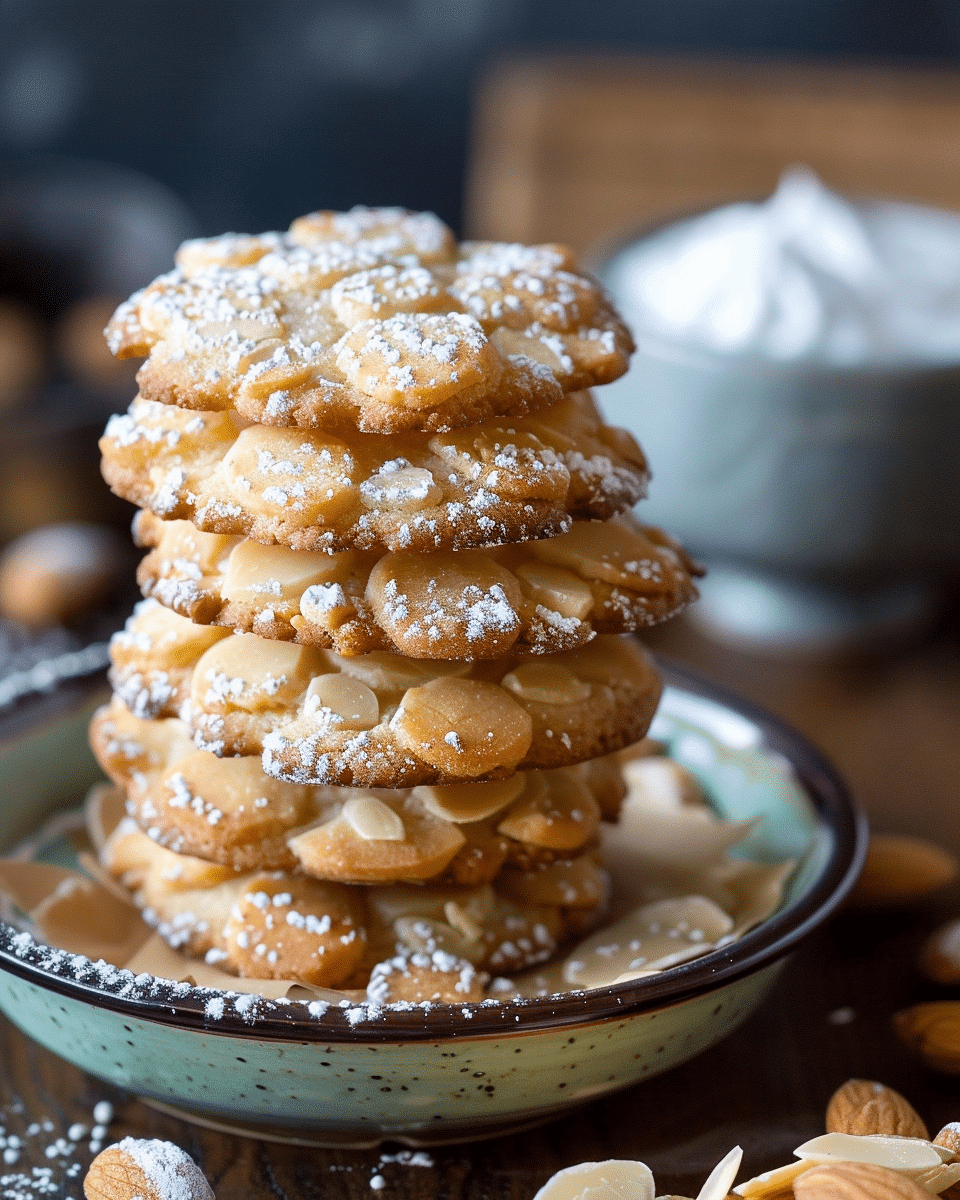
Traditional Pignoli Cookies are one of my favorite Italian treats because they combine a soft, chewy almond center with a delicate, golden coating of pine nuts. I love how these classic cookies deliver a rich almond flavor, a slightly crisp exterior, and a wonderfully tender texture in every bite.
What makes this recipe especially appealing to me is its simplicity. I can prepare these elegant Italian almond cookies with just a handful of ingredients, and I don’t need any flour or complicated baking techniques. Whether I’m making them for Christmas, a family celebration, or an afternoon coffee break, these homemade pignoli cookies always feel special.
Why You’ll Love This Recipe
Authentic Italian flavor: I love the rich, traditional almond taste that comes from using real almond paste and a touch of almond extract.
Soft and chewy texture: I get beautifully tender centers with lightly crisp edges and a delicious crunch from the pine nuts.
Naturally flourless: I don’t need traditional wheat flour to make these cookies, which makes the recipe wonderfully simple.
Easy to prepare: I can make the dough in minutes without chilling it or using complicated equipment.
Perfect for special occasions: I enjoy serving these elegant cookies during Christmas, Easter, family gatherings, and other celebrations.
Great with coffee: I find that the sweet almond flavor pairs beautifully with espresso, cappuccino, or a warm cup of tea.
Ingredients
(Tip: You’ll find the full list of ingredients and measurements in the recipe card below.)
Directions
Preheat the Oven:
I start by preheating my oven to 350°F (175°C). Then, I line a large baking sheet with parchment paper to prevent the cookies from sticking and make cleanup easier.
Prepare the Almond Paste Mixture:
I break the almond paste into small pieces and place them in a large mixing bowl. Next, I add the granulated sugar and beat the mixture until it becomes fine and crumbly. I make sure there are no large pieces of almond paste remaining so the dough will have an even texture.
Add the Egg Whites:
I gradually add the egg whites while continuing to mix. Then I work slowly until the ingredients form a thick, smooth, and sticky dough. I avoid adding the egg whites all at once because I want to maintain control over the consistency.
Add the Flavorings:
I mix in the vanilla extract, almond extract, and salt until everything is evenly incorporated. At this stage, I notice the wonderful almond aroma that makes these Italian cookies so irresistible.
Shape the Cookies:
I pour the pine nuts into a shallow bowl. Using a tablespoon or small cookie scoop, I portion the dough into small balls.
Because the dough is naturally sticky, I lightly dampen my hands with water before shaping each portion. This helps me handle the dough without adding extra ingredients.
Coat with Pine Nuts:
I gently press each dough ball into the pine nuts, covering the tops and sides. I apply just enough pressure to help the nuts adhere without flattening the cookies too much.
Then, I arrange the coated dough balls on the prepared baking sheet, leaving approximately 2 inches between each cookie.
Bake Until Lightly Golden:
Then I bake the cookies for 13–16 minutes, watching carefully as they approach the end of the baking time.
I look for lightly golden edges and pale golden pine nuts while making sure the centers remain soft. I avoid overbaking because the cookies continue to firm up as they cool.
Cool the Cookies:
I leave the cookies on the baking sheet for about 5 minutes after removing them from the oven. This allows them to become firm enough to handle without breaking.
Then, I carefully transfer them to a wire rack and let them cool completely.
Dust and Serve:
Once the cookies have cooled, I lightly dust them with powdered sugar. I like to arrange them on a serving platter and enjoy them with freshly brewed coffee or espresso.
Servings and Timing
I find this recipe convenient when I want to prepare a homemade Italian dessert without spending hours in the kitchen.
Prep Time: 20 minutes
Cooking Time: 15 minutes
Total Time: 35 minutes
Servings: 18 cookies
Calories: Approximately 145 kcal per cookie
Oven Temperature: 350°F (175°C)
I usually make about 18 cookies using tablespoon-sized portions of dough. The exact yield can vary slightly depending on how large I shape each cookie.
Variations
Although I love the traditional version, I sometimes experiment with small changes to create different flavors and presentations.
Lemon Pignoli Cookies:
I add a teaspoon of finely grated lemon zest to the dough for a refreshing citrus flavor. I find that lemon complements the richness of almond paste beautifully.
Orange Almond Pignoli Cookies:
I mix in a little fresh orange zest for a fragrant variation. I especially enjoy this version during the holiday season because the citrus aroma adds a festive touch.
Chocolate-Dipped Pignoli Cookies:
I dip one side of each completely cooled cookie into melted dark chocolate. I allow the chocolate to set before serving, creating a delicious combination of almond, chocolate, and pine nuts.
Extra Almond Pignoli Cookies:
When I want a stronger almond flavor, I slightly increase the almond extract. I add only a few extra drops because almond extract is concentrated and can easily overpower the other ingredients.
Mini Pignoli Cookies:
I shape smaller portions of dough to create bite-sized cookies. I reduce the baking time slightly and watch them closely so they stay soft in the center.
Storage/Reheating
Room Temperature Storage:
I store completely cooled pignoli cookies in an airtight container at room temperature for up to 4–5 days. Then I place parchment paper between layers to prevent the cookies from sticking together.
I keep the container in a cool, dry place away from direct sunlight to help maintain their texture.
Refrigerator Storage:
If I need to keep the cookies a little longer, I place them in an airtight container in the refrigerator for up to one week. I allow them to return to room temperature before serving because I prefer their soft texture when they aren’t cold.
Freezer Storage:
I freeze completely cooled cookies in a freezer-safe container or resealable freezer bag for up to 2–3 months.
I separate the layers with parchment paper and remove as much air as possible before sealing the container. When I’m ready to enjoy them, I thaw the cookies at room temperature.
Reheating:
I usually serve pignoli cookies at room temperature because their soft, chewy texture is best preserved this way.
If I want them slightly warm, I place them in a preheated 275°F (135°C) oven for approximately 3–4 minutes. I avoid heating them too long because they can become dry.
I prefer adding powdered sugar after reheating so the finished cookies maintain their delicate appearance.
Related Recipes:
FAQs
Why are my pignoli cookies spreading too much?
I find that excessive spreading can happen when the dough contains too much moisture or the almond paste has an unusually soft consistency. I make sure to add the egg whites gradually and stop mixing once the dough becomes thick and sticky. If the dough seems too loose, I refrigerate it for 20–30 minutes before shaping.
Can I use almond flour instead of almond paste?
I don’t recommend replacing almond paste directly with almond flour because the two ingredients have different textures and moisture levels. Almond paste contains ground almonds and sugar in a moist, dense mixture, which is essential for the traditional chewy texture. I stick with almond paste for the most reliable results.
How do I keep pine nuts from falling off the cookies?
I gently press the pine nuts into the surface of each dough ball before baking. I find that the natural stickiness of the almond dough helps the nuts adhere. Also I avoid handling the cookies too much immediately after baking because they are delicate while warm.
Are traditional pignoli cookies gluten-free?
I make these cookies without wheat flour, so the recipe is naturally flourless. However, when I need to prepare them for someone avoiding gluten, I carefully check the almond paste, extracts, and other packaged ingredients for gluten-containing additives or cross-contact. I choose certified gluten-free ingredients when necessary.
How do I know when pignoli cookies are fully baked?
I look for lightly golden edges, gently toasted pine nuts, and centers that still appear slightly soft. Usually I begin checking around the 13-minute mark. I know the cookies will continue to firm up as they cool, so I avoid waiting until they feel completely firm in the oven.
Conclusion
Traditional Pignoli Cookies are a wonderful example of how a few simple ingredients can create an elegant and flavorful Italian dessert. I love the combination of rich almond paste, delicate pine nuts, and a soft, chewy center that makes every cookie feel like a special treat.
I especially enjoy making these cookies during the holidays, but I find them just as satisfying throughout the year. Their naturally flourless dough, straightforward preparation, and beautiful appearance make them a dependable addition to my baking collection.
Whether I’m preparing a homemade cookie platter, sharing treats with family and friends, or enjoying something sweet alongside my afternoon espresso, I always appreciate the classic flavor and irresistible texture of these traditional Italian almond cookies.
📖 Recipe:
Print
Traditional Pignoli Cookies – Soft Italian Almond Cookies
- Total Time: 35 minutes
- Yield: 18 cookies
- Diet: Gluten Free
Description
Traditional Pignoli Cookies are classic Italian almond cookies with soft, chewy centers, lightly golden edges, and a delicate coating of toasted pine nuts. Naturally flourless and wonderfully aromatic, these elegant cookies are perfect for holidays, celebrations, or enjoying with espresso.
Ingredients
8 oz almond paste, broken into small pieces
1/2 cup granulated sugar
2 large egg whites, added gradually
1/2 teaspoon pure vanilla extract
1/4 teaspoon almond extract
1 pinch salt
1 cup pine nuts, for coating
2 tablespoons powdered sugar, for dusting
Instructions
- Preheat the oven to 350°F (175°C). Line a large baking sheet with parchment paper and set aside.
- Break the almond paste into small pieces and place them in a large mixing bowl. Add the granulated sugar and beat until the mixture becomes fine and crumbly, with no large pieces of almond paste remaining.
- Gradually add the egg whites while mixing continuously. Continue mixing until a thick, smooth, and sticky dough forms. Add the egg whites slowly to avoid making the dough too loose.
- Add the vanilla extract, almond extract, and salt. Mix until all the ingredients are evenly incorporated and the dough has a consistent texture.
- Place the pine nuts in a shallow bowl. Using a tablespoon or small cookie scoop, portion the dough into approximately 18 equal pieces. Lightly dampen your hands with water and gently roll each portion into a ball.
- Press each dough ball gently into the pine nuts, coating the tops and sides. Apply light pressure to help the pine nuts adhere without flattening the cookies excessively.
- Arrange the coated dough balls on the prepared baking sheet, leaving approximately 2 inches of space between each cookie.
- Bake for 13–16 minutes, or until the edges are lightly golden and the pine nuts are delicately toasted. The centers should remain slightly soft. Avoid overbaking to preserve the chewy texture.
- Remove the baking sheet from the oven and allow the cookies to cool on the sheet for approximately 5 minutes. Carefully transfer them to a wire rack and let them cool completely.
- Once completely cooled, lightly dust the cookies with powdered sugar. Arrange on a serving platter and serve with coffee, espresso, cappuccino, or tea.
Notes
Almond paste: Use high-quality almond paste for the best flavor and chewy texture. Almond flour is not a direct substitute because it has a different moisture content and consistency.
Egg whites: Add gradually to control the dough consistency. The finished dough should be thick and sticky rather than runny.
Sticky dough: Lightly dampen your hands with water before shaping to prevent sticking without adding extra ingredients.
Prevent spreading: If the dough appears too soft, refrigerate it for 20–30 minutes before shaping.
Pine nut coating: Gently press the pine nuts into the dough to help them remain attached during baking.
Avoid overbaking: Remove the cookies when the edges are lightly golden and the centers remain soft. They will continue to firm up as they cool.
Lemon variation: Add 1 teaspoon finely grated lemon zest to the dough for a refreshing citrus flavor.
Orange variation: Add a little freshly grated orange zest for a fragrant holiday-inspired version.
Chocolate-dipped variation: Dip one side of each completely cooled cookie into melted dark chocolate and allow the chocolate to set before serving.
Extra almond flavor: Add a few additional drops of almond extract for a more pronounced almond taste, taking care not to overpower the cookies.
Mini cookies: Shape smaller portions for bite-sized treats and reduce the baking time slightly, checking frequently.
Room temperature storage: Store completely cooled cookies in an airtight container for up to 4–5 days. Separate layers with parchment paper.
Refrigerator storage: Keep in an airtight container in the refrigerator for up to 1 week. Bring to room temperature before serving.
Freezer storage: Freeze cooled cookies in a freezer-safe container or resealable bag for up to 2–3 months, separating layers with parchment paper. Thaw at room temperature.
Reheating: For slightly warm cookies, heat in a preheated 275°F (135°C) oven for 3–4 minutes. Dust with powdered sugar after reheating.
Gluten-free tip: These cookies contain no wheat flour, but check almond paste, extracts, and other packaged ingredients for gluten-containing additives or cross-contact. Choose certified gluten-free ingredients when necessary.
Serving suggestion: Pair with freshly brewed espresso, cappuccino, or tea for a traditional Italian-style treat.
Nutrition information is approximate and may vary depending on ingredient brands and cookie size.
- Prep Time: 20 minutes
- Cook Time: 15 minutes
- Category: Dessert
- Method: Baking
- Cuisine: Italian
Nutrition
- Serving Size: 1 cookie
- Calories: 145 kcal
- Sugar: 12 g
- Sodium: 18 mg
- Fat: 9 g
- Saturated Fat: 0.8 g
- Unsaturated Fat: 8 g
- Trans Fat: 0 g
- Carbohydrates: 15 g
- Fiber: 1.5 g
- Protein: 3.5 g
- Cholesterol: 0 mg