
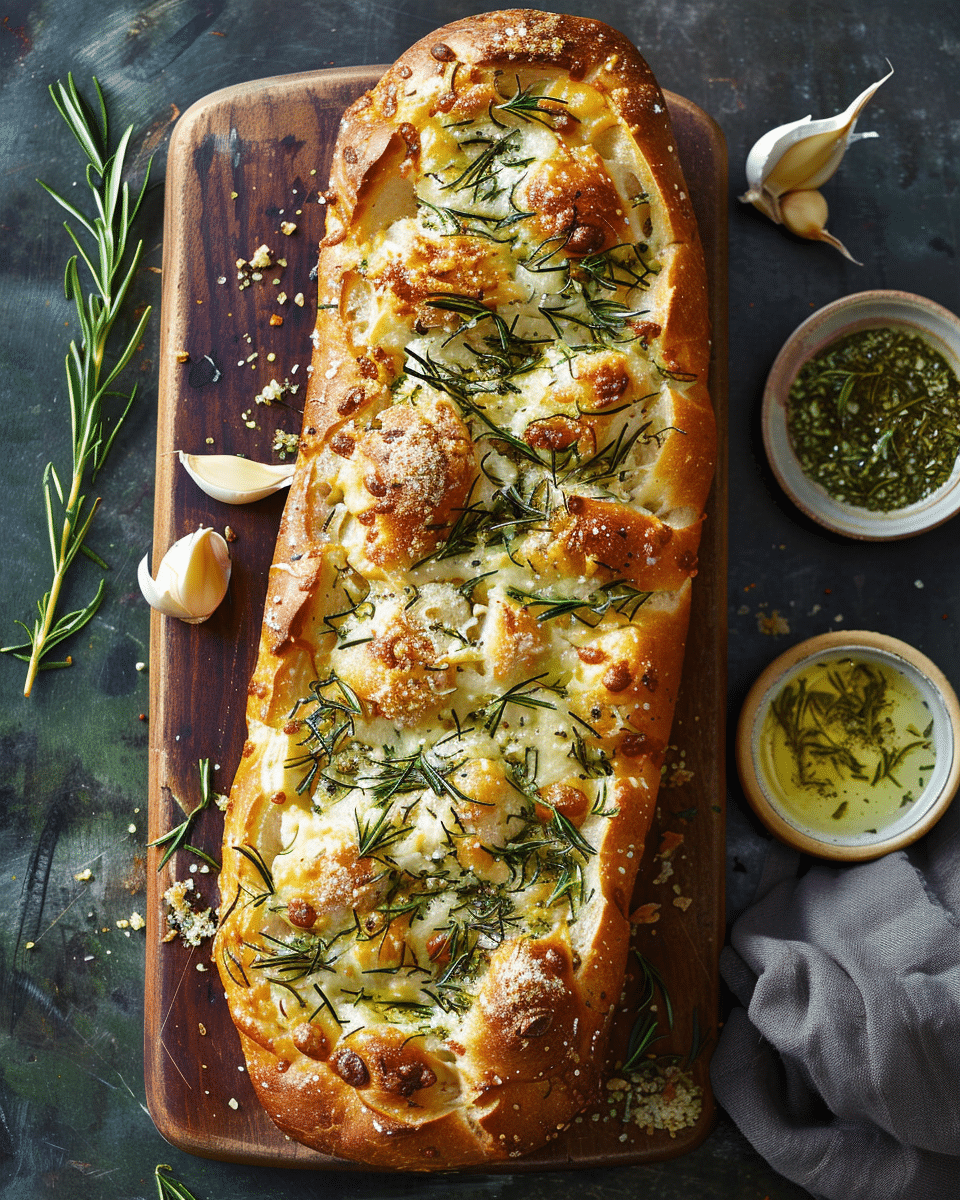
There’s something incredibly comforting about the smell of freshly baked bread filling my kitchen, especially when it’s infused with fragrant rosemary and sweet roasted garlic. This Rosemary Garlic Bread is one of my favorite homemade bread recipes because it combines a beautifully golden, slightly crisp crust with a soft, tender, and flavorful interior.
I love how the roasted garlic adds a mellow sweetness while the rosemary, oregano, and extra virgin olive oil create a delicious Mediterranean-inspired flavor. Whether I serve it alongside a hearty soup, a fresh salad, or simply with olive oil and balsamic vinegar for dipping, this rustic bread always makes a meal feel special.
Best of all, I can prepare this homemade bread with simple pantry ingredients and a little patience while the dough rises.
Why You’ll Love This Recipe
Rich, aromatic flavor: I combine roasted garlic, dried rosemary, oregano, and olive oil to create a wonderfully fragrant loaf with savory flavor in every bite.
Beautiful rustic crust: I love how the bread develops a golden exterior while remaining soft and tender inside.
Simple ingredients: I can make this recipe using basic baking staples, herbs, and a head of roasted garlic.
Perfect for dipping: I especially enjoy serving warm slices with extra virgin olive oil, balsamic vinegar, and freshly ground black pepper.
Versatile and delicious: I serve this bread with pasta, soups, salads, roasted vegetables, or as part of a homemade appetizer platter.
Great for homemade baking: I find the kneading, rising, and shaping process rewarding, especially when I pull a beautiful golden loaf from the oven.
Ingredients
(Tip: You’ll find the full list of ingredients and measurements in the recipe card below.)
For this homemade Rosemary Garlic Bread, I use a combination of bread flour, aromatic herbs, roasted garlic, and extra virgin olive oil.
For the Bread Dough:
1 1/2 teaspoons active dry yeast
1 cup warm water (110–115°F)
2 teaspoons white sugar
2 teaspoons fine salt
3 tablespoons extra virgin olive oil
2 1/2 cups bread flour
1 tablespoon dried rosemary
1/4 teaspoon freshly ground black pepper
1/2 teaspoon dried oregano
1 head roasted garlic
For Finishing and Serving:
Extra virgin olive oil, for brushing and serving
Coarse sea salt, for sprinkling
Clean water, in a spray bottle
Good-quality balsamic vinegar, for serving
Additional rosemary, if desired
Directions
Activate the Yeast:
I begin by pouring 1 cup of warm water into a large mixing bowl. Then I sprinkle the active dry yeast over the water, then stir in the sugar and salt.
I let the mixture sit for approximately 10 minutes until it becomes foamy. This indicates that the yeast is active and ready to help the dough rise.
I make sure the water temperature stays between 110°F and 115°F because excessively hot water can damage the yeast.
Prepare and Knead the Dough:
Once the yeast mixture is ready, I add 3 tablespoons of extra virgin olive oil and the bread flour.
I mix everything until a rough dough forms, then knead it by hand or use a stand mixer fitted with a dough hook.
I continue kneading for approximately 10 minutes until the dough becomes smoother and more elastic.
Incorporate the Herbs:
I sprinkle the dried rosemary, freshly ground black pepper, and oregano over the dough.
I knead for another 5 minutes to distribute the herbs evenly throughout the mixture.
This step is especially important because I want every slice to have the wonderful flavor of rosemary and oregano.
Add the Roasted Garlic:
I gently squeeze the softened roasted garlic cloves from their skins and incorporate them into the dough.
I knead by hand for approximately 1 minute, making sure the garlic is distributed without completely breaking down.
At this stage, I expect the dough to feel slightly sticky but still manageable.
Allow the Dough to Rise:
I lightly grease a large bowl with olive oil and transfer the dough into it.
I turn the dough several times so that every side receives a thin coating of oil. Then I cover the bowl tightly with plastic wrap.
I place it in a warm, draft-free area and allow the dough to rise until it doubles in size.
This usually takes about 1 hour, although I sometimes allow up to 2 hours when my kitchen is cooler.
Shape the Bread:
Once the dough has doubled, I gently punch it down to release excess air.
I shape it into a round rustic loaf and transfer it onto a greased baking sheet.
Using a sharp knife, I carefully score a criss-cross pattern across the top. I love this simple detail because it gives the finished bread a beautiful artisan-style appearance.
Let the Dough Rise Again
I cover the shaped loaf with a large inverted mixing bowl, making sure there is enough room for the dough to expand.
I allow it to rise for approximately 1 hour or until doubled in size.
This second rise helps create a lighter, more tender interior.
Prepare for Baking
I preheat my oven to 375°F (190°C).
Once the dough has risen, I gently brush the surface with extra virgin olive oil and sprinkle it with coarse sea salt and a little additional rosemary.
I work carefully to avoid deflating the loaf.
Bake the Rosemary Garlic Bread
I place the bread in the preheated oven and bake it for approximately 25–30 minutes.
Halfway through baking, I lightly spray the loaf with clean water. This helps encourage a nicely developed crust.
After the initial baking period, I increase the oven temperature to 425°F (220°C) and lightly spray the loaf again.
I continue baking briefly until the crust develops a rich golden-brown color, watching closely to prevent burning.
Rest and Serve
I remove the finished loaf from the oven and allow it to rest for at least 5 minutes before slicing.
I love serving this Rosemary Garlic Bread while it is still warm, accompanied by a small dish of extra virgin olive oil, balsamic vinegar, and freshly ground black pepper.
The combination of the crisp crust, tender interior, and fragrant roasted garlic makes every slice incredibly satisfying.
Servings and Timing
Prep Time: 2 hours
Cooking Time: 25–30 minutes
Total Time (stated): 2 hours 25 minutes
Servings: 8 servings
Estimated Calories: 190 kcal per serving
Variations
One of the things I enjoy most about this Rosemary Garlic Bread is how easily I can adjust the flavors while keeping the same basic dough.
Cheesy Rosemary Garlic Bread:
When I want something extra savory, I add shredded Parmesan, mozzarella, or Asiago cheese to the dough.
I especially love sprinkling Parmesan over the top before baking because it creates a deliciously flavorful crust.
Fresh Herb Garlic Bread:
When fresh herbs are available, I replace the dried rosemary with finely chopped fresh rosemary.
I sometimes add fresh thyme or parsley for additional fragrance. I generally use about three times as much fresh herb as dried herb when making substitutions.
Roasted Garlic and Olive Bread:
For a Mediterranean-inspired variation, I fold chopped Kalamata or green olives into the dough along with the roasted garlic.
I enjoy the contrast between the salty olives and the mellow sweetness of the roasted garlic.
Spicy Rosemary Garlic Bread:
When I want a little heat, I add a pinch of crushed red pepper flakes to the dough.
I find that the gentle spiciness pairs beautifully with the rosemary, garlic, and olive oil.
Whole Wheat Rosemary Garlic Bread:
For a heartier version, I replace part of the bread flour with whole wheat flour.
I usually start by substituting about 1/2 cup of bread flour with whole wheat flour and adjust the water slightly if the dough feels too dry.
This variation gives the bread a nuttier flavor and a slightly denser texture.
Storage/Reheating
I always think homemade bread tastes best on the day it is baked, but proper storage helps preserve its flavor and texture.
Room Temperature Storage:
I allow the bread to cool completely before storing it.
Then I wrap it tightly or place it in an airtight bread bag and keep it at room temperature for up to 2 days.
I avoid refrigerating the loaf because refrigeration can make bread turn stale more quickly.
Freezing:
When I want to keep the bread longer, I freeze it.
I prefer slicing the loaf first, then wrapping the slices tightly and placing them in a freezer-safe bag.
I can store the bread in the freezer for up to 3 months for the best quality.
Reheating in the Oven:
To bring back the fresh-baked texture, I preheat my oven to 350°F (175°C).
I place the bread in the oven for approximately 8–10 minutes, depending on the size of the portion.
For a whole loaf, I allow additional warming time until the center is heated through.
Reheating in the Toaster:
For individual slices, I often use my toaster.
I toast the bread until the edges become lightly crisp, then drizzle a little olive oil over the warm surface.
Reheating from Frozen:
When reheating frozen slices, I place them directly into the toaster or oven without thawing first.
I find this method especially convenient when I want a quick side dish for soup or pasta.
Related Recipes:
- Creamy Dijon Rosemary Chicken
- Mozzarella Stuffed Rosemary Parmesan Soft Pretzels
- Italian Rosemary Focaccia
FAQs
Can I use all-purpose flour instead of bread flour?
Yes, I can substitute all-purpose flour for bread flour when necessary. However, I find that bread flour produces a slightly chewier texture and better structure because of its higher protein content.
When I use all-purpose flour, the bread usually turns out a little softer, but it still tastes delicious.
Can I use fresh rosemary instead of dried rosemary?
Absolutely. I often use fresh rosemary when I have it available.
For this recipe, I replace the tablespoon of dried rosemary with approximately 3 tablespoons of finely chopped fresh rosemary.
I make sure to chop the leaves finely so the flavor distributes evenly throughout the dough.
Why didn’t my Rosemary Garlic Bread rise properly?
When my dough doesn’t rise as expected, I first check the yeast and the temperature of the water.
Water that is too hot can damage the yeast, while water that is too cold can slow down its activity.
I also make sure the dough rests in a warm, draft-free environment. Sometimes I simply need to allow more rising time, especially during colder weather.
Can I make Rosemary Garlic Bread ahead of time?
Yes, I can prepare the dough in advance and refrigerate it for a slower rise.
After kneading, I place the dough in a lightly oiled bowl, cover it tightly, and refrigerate it overnight.
The next day, I let it warm slightly, shape it into a loaf, and allow it to complete its final rise before baking.
I find that this method can also help develop a deeper, more complex flavor.
What can I serve with Rosemary Garlic Bread?
I love serving this bread with a variety of meals.
Some of my favorite pairings include creamy tomato soup, roasted vegetable soup, pasta dishes, fresh salads, and grilled chicken.
For a simple appetizer, I slice the bread and serve it with extra virgin olive oil, balsamic vinegar, and freshly ground black pepper.
I also enjoy using leftover slices to make toasted sandwiches or flavorful homemade croutons.
Conclusion
This homemade Rosemary Garlic Bread is one of those recipes I love returning to whenever I want something warm, comforting, and full of flavor. The combination of fragrant rosemary, sweet roasted garlic, oregano, and rich extra virgin olive oil creates a rustic loaf that feels special without requiring complicated ingredients.
I especially appreciate the contrast between the golden, slightly crisp crust and the soft, aromatic interior. Whether I serve it fresh from the oven with olive oil and balsamic vinegar, alongside a comforting bowl of soup, or as part of a family dinner, it always adds a delicious homemade touch.
With a little patience during the rising process and a few simple baking techniques, I can create a beautiful artisan-style loaf right in my own kitchen. For me, nothing compares to the aroma and flavor of freshly baked Rosemary Garlic Bread.
📖 Recipe:
Print
Rosemary Garlic Bread
- Total Time: 2 hours 30 minutes
- Yield: 8 servings
- Diet: Vegan
Description
This homemade Rosemary Garlic Bread features a golden, lightly crisp crust and a soft, tender interior infused with sweet roasted garlic, fragrant rosemary, oregano, and extra virgin olive oil. Perfect for serving warm with soups, pasta, salads, or olive oil and balsamic vinegar for dipping.
Ingredients
1 1/2 teaspoons active dry yeast
1 cup warm water (110–115°F)
2 teaspoons white sugar
2 teaspoons fine salt
3 tablespoons extra virgin olive oil
2 1/2 cups bread flour
1 tablespoon dried rosemary
1/4 teaspoon freshly ground black pepper
1/2 teaspoon dried oregano
1 head roasted garlic
Extra virgin olive oil, for brushing and serving
Coarse sea salt, for sprinkling
Clean water, in a spray bottle
Good-quality balsamic vinegar, for serving
Additional rosemary, if desired
Instructions
- Activate the yeast: Pour 1 cup of warm water (110–115°F) into a large mixing bowl. Sprinkle the active dry yeast over the water, then stir in the sugar and fine salt. Let stand for approximately 10 minutes until the mixture becomes foamy.
- Prepare the dough: Add 3 tablespoons of extra virgin olive oil and the bread flour to the yeast mixture. Stir until a rough dough forms. Knead by hand or with a stand mixer fitted with a dough hook for approximately 10 minutes, until the dough becomes smooth and elastic.
- Incorporate the herbs: Sprinkle the dried rosemary, freshly ground black pepper, and dried oregano over the dough. Continue kneading for another 5 minutes to distribute the herbs evenly.
- Add the roasted garlic: Gently squeeze the softened roasted garlic cloves from their skins and add them to the dough. Knead by hand for approximately 1 minute, distributing the garlic throughout without completely breaking down the cloves. The dough should feel slightly sticky but manageable.
- First rise: Lightly grease a large bowl with olive oil. Transfer the dough to the bowl and turn it several times to coat all sides. Cover tightly with plastic wrap and place in a warm, draft-free area. Allow the dough to rise until doubled in size, approximately 1–2 hours.
- Shape the loaf: Gently punch down the risen dough to release excess air. Shape it into a round rustic loaf and place it on a greased baking sheet. Using a sharp knife, score a criss-cross pattern across the top.
- Second rise: Cover the shaped loaf with a large inverted mixing bowl, leaving enough space for expansion. Allow it to rise for approximately 1 hour, or until doubled in size.
- Prepare for baking: Preheat the oven to 375°F (190°C). Gently brush the risen loaf with extra virgin olive oil and sprinkle with coarse sea salt and additional rosemary, if desired. Avoid pressing down on the dough.
- Bake the bread: Place the loaf in the preheated oven and bake for approximately 25–30 minutes. Halfway through baking, lightly spray the loaf with clean water to encourage a crisp crust. After the initial baking period, increase the oven temperature to 425°F (220°C), lightly spray the loaf again, and continue baking briefly until the crust becomes richly golden brown. Watch carefully to prevent burning.
- Rest and serve: Remove the bread from the oven and let it rest for at least 5 minutes before slicing. Serve warm with extra virgin olive oil, balsamic vinegar, and freshly ground black pepper, or alongside your favorite soup, salad, or pasta dish.
Notes
Water temperature: Keep the water between 110°F and 115°F when activating the yeast. Excessively hot water can damage the yeast and prevent the dough from rising properly.
Flour substitution: All-purpose flour can replace bread flour, although the finished loaf may have a slightly softer texture and less chew.
Fresh rosemary: Substitute approximately 3 tablespoons of finely chopped fresh rosemary for 1 tablespoon of dried rosemary.
Roasted garlic: Make sure the roasted garlic cloves are soft and cooled before incorporating them into the dough. Roasting gives the garlic a mellow, slightly sweet flavor.
Cheesy variation: Add shredded Parmesan, mozzarella, or Asiago cheese to the dough, or sprinkle Parmesan over the loaf before baking.
Olive variation: Fold chopped Kalamata or green olives into the dough along with the roasted garlic for additional Mediterranean flavor.
Spicy variation: Add a pinch of crushed red pepper flakes for a gentle kick of heat.
Whole wheat variation: Replace approximately 1/2 cup of bread flour with whole wheat flour. Adjust the water slightly if the dough becomes too dry.
Rising time: The two rising periods may require approximately 2–3 hours combined, depending on room temperature. Actual total preparation time may be closer to 3–4 hours, including kneading, shaping, rising, and baking.
Make ahead: After kneading, place the dough in a lightly oiled bowl, cover tightly, and refrigerate overnight. The following day, allow it to warm slightly, shape the loaf, and complete the final rise before baking.
Room temperature storage: Cool the bread completely, then wrap tightly or store in an airtight bread bag at room temperature for up to 2 days. Avoid refrigeration because it can accelerate staling.
Freezing: Slice the cooled loaf, wrap the slices tightly, and place them in a freezer-safe bag. Freeze for up to 3 months for best quality.
Oven reheating: Warm bread in a preheated 350°F (175°C) oven for approximately 8–10 minutes. A whole loaf may require additional time.
Reheating frozen slices: Place frozen slices directly into a toaster or oven without thawing.
Serving suggestions: Serve with olive oil and balsamic vinegar, creamy tomato soup, roasted vegetable soup, pasta, salads, or grilled chicken. Leftover slices are excellent for toasted sandwiches or homemade croutons.
Nutrition: Nutritional values are estimates per serving, excluding optional dipping oil, balsamic vinegar, and additional toppings.
- Prep Time: 2 hours
- Cook Time: 30 minutes
- Category: Bread
- Method: Baking
- Cuisine: Mediterranean
Nutrition
- Serving Size: 1 slice (1/8 loaf)
- Calories: 190 kcal
- Sugar: 1.5 g
- Sodium: 590 mg
- Fat: 5.5 g
- Saturated Fat: 0.8 g
- Unsaturated Fat: 4.5 g
- Trans Fat: 0 g
- Carbohydrates: 30 g
- Fiber: 1.5 g
- Protein: 5 g
- Cholesterol: 0 mg